Joint pain can be incredibly debilitating. Pain in your knees, shoulder, and hips can make things like walking, doing laundry, exercising, and gardening difficult and painful. Muscle weakness is often one of the big causes of joint pain.
Your muscles act as shock absorbers, working to control all the load that goes through your joints. This ensures an even distribution of this load through your muscles and across the entire joint.
When your muscles aren’t strong enough, they can’t perform this shock absorbing function and joint pain is the result.
Getting your muscles stronger is the best solution to this problem. Basic strengthening exercises like squats, step ups, and leg presses can help.
You need to exercise at the correct level of resistance to make strength gains. Sets of 5 to 10 reps at a high level of effort is important. The chart below is a guide to effort level for strength training.
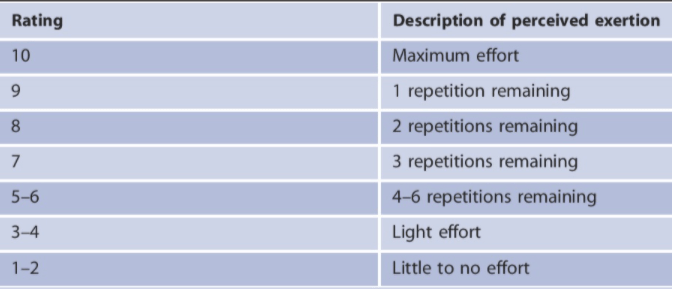
If you’re using the right weight, your effort level should be a rating of 7 to 8.
Even if there is a low level of pain with exercise (think 2/10 pain), research shows they can still make you stronger and cause you to have less pain over time.
Sometimes strengthening exercises at the level of resistance needed to produce results is too painful. The good news is there is a new way to increase strength while minimizing joint pain. It’s called blood flow restriction training.
How Blood Flow Restriction can help
Blood flow restriction training allows you to perform strengthening exercises at a low level of resistance and get the same benefit that you would from high resistance exercises. This lets you get stronger with less joint pain.
Blood flow restriction training uses an inflated cuff to restrict the flow of blood to the muscles you are strengthening. As a result, you can exercise at a lower level of resistance to avoid joint pain but your body creates the same hormones and chemicals that it would if you performed high resistance strength training.
Proper blood flow restriction training requires precise measurements of blood pressure to determine how tight the restriction should be applied. Solutions physical therapists are trained in how to correctly apply blood flow restriction to perform it safely.
If you’ve tried strengthening exercises for joint pain and you’re finding it still hurts, we can help!
At Solutions Physical Therapy & Sports Medicine, we’re experts at treating joint pain. We will do a full assessment and determine if blood flow restriction or other treatments are right for you. We will develop a plan to help you move without pain.
Call us at 703-299-3111, or click here and a member of our team will schedule an evaluation with one of our expert physical therapists.
Working to keep you living your best life,
The Solutions Physical Therapy & Sports Medicine Team