If you’re training hard, staying active, and pushing your performance, you expect your body to respond. But tight muscles, stubborn trigger points, or slow recovery can still get in the way — even when you’re not injured. This is where dry needling becomes a powerful tool.
Dry needling helps active adults release tension, restore mobility, and recover faster so they can keep training without feeling held back. It has benefits for strength, activation, performance, and movement — not just pain.
At Solutions Physical Therapy & Sports Medicine, dry needling isn’t just a treatment. It’s a strategic tool that helps you move better today and perform better long-term.
Why Your Muscles Feel Tight (Even When You’re Not Injured)
Active adults often deal with:
- Muscles that never fully relax
- Movement restrictions that stretching can’t fix
- Fatigue that lingers between workouts
- Compensation patterns during sport or lifting
- “Dead glutes,” tight hip flexors, or stiff shoulders
You’re working hard, but your body feels stuck.
These problems usually come from neuromuscular tension and trigger points, not from injuries. When a muscle gets overloaded, under-recovered, or stressed, it can “lock up” and stop performing well.
Dry needling helps break this cycle.
What Dry Needling Actually Does
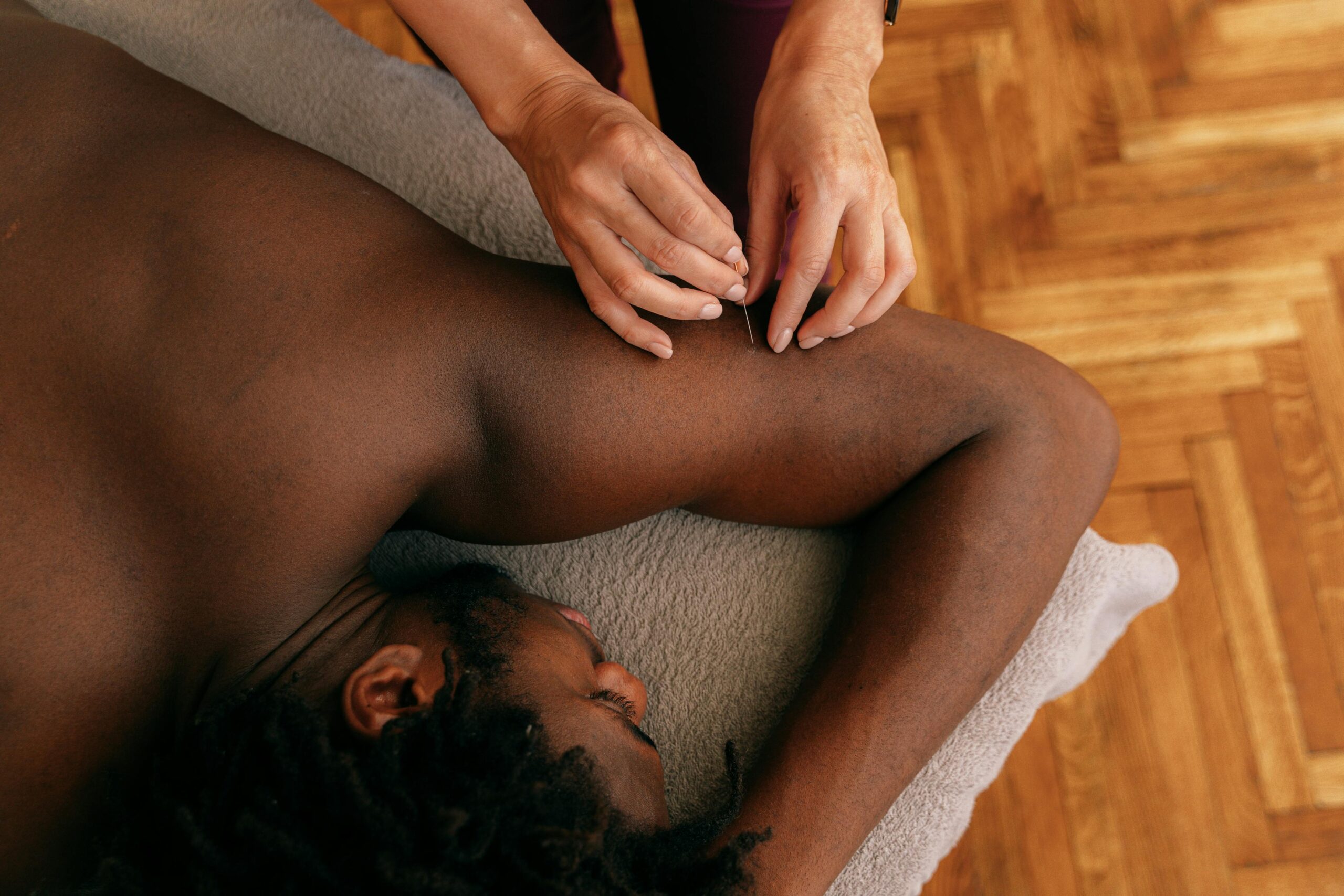
Dry needling uses thin, sterile needles to target trigger points and dysfunctional tissue. When placed into a tight muscle, the needle creates a quick, therapeutic response:
1. Releases neuromuscular tension
The muscle relaxes at a deeper level than stretching or massage can reach.
2. Improves blood flow
Fresh oxygen helps tissue recover faster.
3. Resets motor activation
Your brain reconnects with the muscle, improving strength and movement.
4. Reduces protective guarding
Your body stops bracing and starts moving naturally again.
Research shows dry needling can reduce pain, improve range of motion, and increase muscle activation, even in people without injury. It’s not just about recovery. It’s about performance.

Dry Needling Benefits for Health & Performance
You don’t need to be hurt to benefit from this technique. Active adults and athletes use dry needling to:
Recover faster after workouts
Less soreness, faster muscle reset, quicker return to training, particularly after periods of increased exercise volume or intensity
Improve mobility
Especially for shoulders, hips, quads, calves, and upper back.
Activate key muscles
Great for glutes, core, rotator cuff, and running-specific muscles.
Reduce muscle fatigue
Helpful during heavy training cycles or sport seasons.
Improve lifting and sport mechanics
When tight areas relax and mobility improves, technique becomes easier.
Train consistently without breakdown
Better recovery means better long-term performance.
Does Dry Needling Hurt? What It Really Feels Like
Most people expect dry needling to feel like a shot or piercing pain…but it doesn’t. We’ll often combine it with some light electrical stimulation to produce a better effect with less soreness.
Here’s what you’ll actually feel:
- A deep pressure or ache
- A quick muscle twitch (normal and helpful)
- A warm, relaxing sensation afterward
Most athletes describe it as: “a deep muscle twitch and then a thumping or fluttering sensation as the electrical stimulation turns on.”
Afterward, you may feel mild soreness for 12–24 hours (similar to a workout!)
This is normal and temporary. Your PT will teach you what to do afterward so you feel your best.
Is Dry Needling Safe?
Yes…when performed by a licensed physical therapist with advanced training.
Dry needling is extremely safe. Side effects are mild and temporary:
- Light soreness
- Small bruise (less common)
- Sometimes fatigue for a few hours
Is Dry Needling For Kids?
Teen athletes can often benefit, but it depends on age, sport, and maturity. A PT will guide you through whether it’s appropriate.
At Solutions Physical Therapy & Sports Medicine, safety and comfort come first. You’ll never be rushed, pressured, or surprised.
Dry Needling vs. Massage vs. Acupuncture
Active adults often ask:
Is dry needling better than massage?
They are different tools that serve a different purpose. Massage helps with circulation and relaxation. On the other hand, dry needling targets deep neuromuscular dysfunction that massage cannot always reach.
Most athletes benefit from both. However, dry needling works faster for stubborn trigger points.
Is dry needling the same as acupuncture?
No. Acupuncture uses Eastern medicine principles and focuses on energy pathways. Dry needling uses Western anatomy and targets muscular dysfunction.
Is one better?
They serve different purposes. If your goal is performance, movement, and recovery, then dry needling is a better match.
How Long Do Dry Needling Results Last?
Many athletes feel immediate changes in:
- Mobility
- Muscle activation
- Tension reduction
For lasting results: Combine dry needling with corrective strength and mobility work.
This is where physical therapy provides the biggest value.
Needles reset the muscle and training reinforces the new pattern.
What Not to Do After Dry Needling
To get the best results:
- Avoid heavy lifting in the treated area for 12–24 hours
- Hydrate well
- Do gentle mobility or walking
- Avoid aggressive massage directly on the site
Light movement helps recovery. Resting completely is not required.
How Dry Needling Fits Into a Performance Plan
Dry needling works best as part of a structured approach:
1. Assess movement + identify restrictions
Your PT finds the root cause of tightness or imbalance.
2. Apply dry needling strategically
Targets the muscles that limit your movement or performance.
3. Reinforce with strength
Glute strength, scapular control, core activation, and mobility work lock in improvements.
4. Progress to performance training
Running mechanics, golf rotation, overhead lifting, or sport-specific needs.
This approach helps active adults move confidently, recover faster, and train with fewer setbacks.
The Future You: Moving Better, Recovering Faster, Performing Stronger with Dry Needling
Imagine:
- Your hips move freely again
- Your shoulders feel open and strong
- You recover faster between workouts
- You feel balanced and powerful
- You can train harder without flare-ups
- You stop wasting time on random stretching or guessing what your body needs
Dry needling helps unlock the strength and movement your body already has, so you can keep doing the activities you love for life.
Feel the Difference Dry Needling Can Make
If you’re dealing with tightness, fatigue, or limitations that keep you from performing your best, dry needling can help you reset, recover, and move with confidence.