

If you want to improve golf performance without rebuilding your swing, there are 5 things we focus on:
- Increasing hip rotation mobility
- Improving thoracic spine rotation
- Building core stability and endurance
- Using a golf swing analyzer with movement assessment
- Strengthening the body behind the swing
Most performance plateaus are caused by physical limitations that can affect swing technique.
This blog explains exactly how physical therapy improves golf performance, protects your back and hips, and helps you maintain power and consistency for all 18 holes.
This article is for:
- Active adult golfers dealing with back tightness or hip stiffness
- Players asking, “Why does my swing fall apart late in the round?”
- Golfers considering a golf swing analyzer
- Anyone wanting to improve golf performance after 40
If you want more distance, better consistency, and less pain without starting your swing from scratch, this is for you.
At Full Strength Physical Therapy, we specialize in bridging rehabilitation and performance. Our TPI-informed physical therapy approach improves movement quality first, then performance output.
The Physical Qualities Behind Reliable Golf Performance
When people ask, “What improves golf performance?” they usually think of swing drills. However, high-performing amateur golfers share three physical qualities:
1. Adequate Hip Rotation
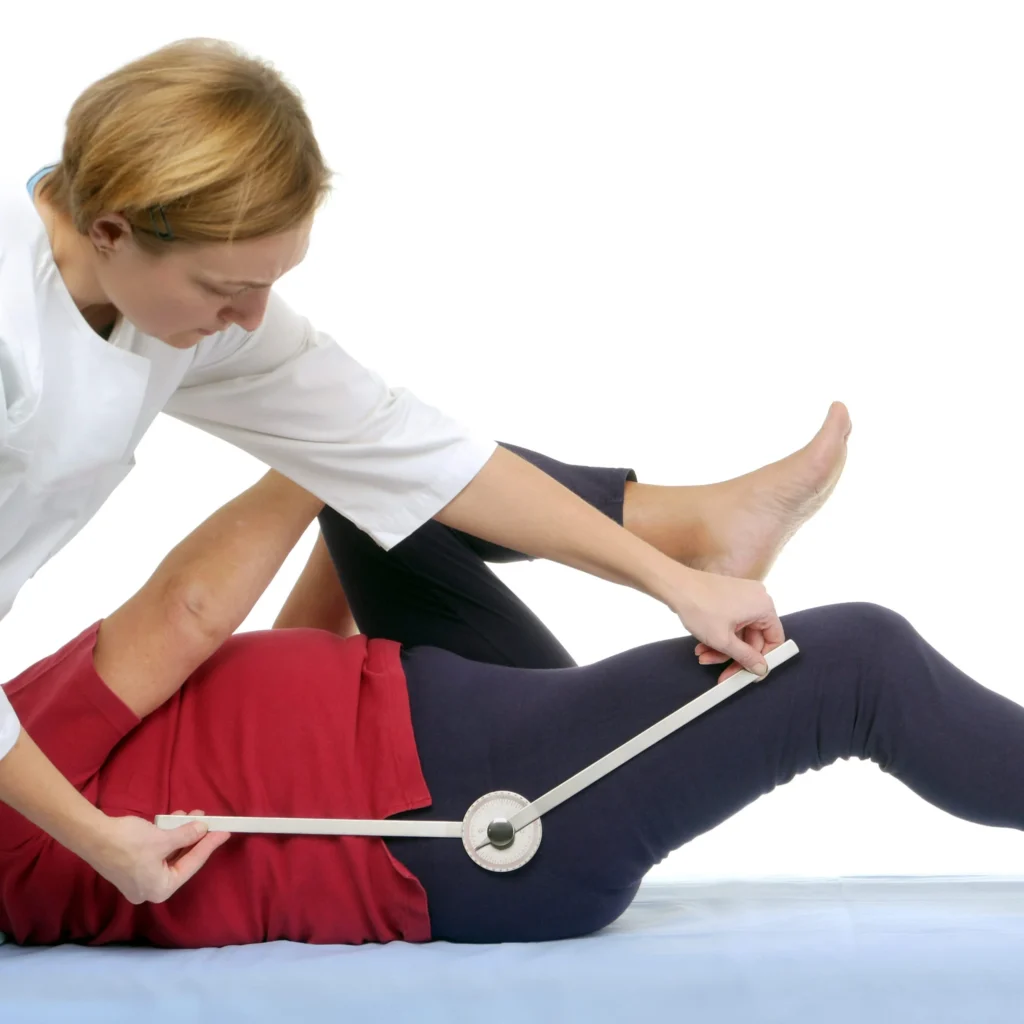
Limited hip internal rotation reduces pelvic turn and forces the lumbar spine to compensate. This decreases power transfer and increases injury risk.
2. Thoracic Spine Mobility
Upper and lower body separation depends on mid-back mobility. Without it, golfers lose torque and rely on arm-dominant swings.
3. Core Stability and Strength Endurance
A stable trunk transfers ground force efficiently. When core endurance fades, sequencing breaks down.
What Does This Mean Practically?
If you:
- Lose distance late in rounds
- Feel stiff the day after playing
- Struggle with consistent ball striking
- Plateau despite lessons
Your body may be limiting your golf performance.
Research in rotational sports consistently shows that mobility plus strength produces better force transfer and injury resilience.
At Full Strength Physical Therapy, we assess rotational range of motion, asymmetries, load tolerance, and endurance capacity before recommending swing changes. Better body mechanics produce better swing mechanics.
Golf Swing Basics That Protect Your Back and Hips
Many golfers wonder:
“Why does my lower back hurt after golf?”
“Is golf bad for your spine?”
“How do I protect my hips while golfing?”
Poor rotational mechanics can be causing pain and injury.
Swing Basics That Reduce Spinal Stress
- Neutral setup posture
- Controlled pelvic rotation
- Proper weight shift
- Lead leg stability
- Efficient sequencing
When hip mobility is restricted, the lumbar spine rotates excessively. Over time, this creates irritation and stiffness.
If hip tightness is limiting your turn, read Physical Therapy Can Help Golfer’s Hip Mobility and Pain.
If back discomfort interrupts your rounds, start here: 3 Easy Exercises to Let You Golf Without Back Pain.
At Full Strength Physical Therapy, we treat golf performance and injury prevention as one system.
We evaluate:
- Hip internal rotation symmetry
- Lumbar load tolerance
- Thoracic mobility
- Core activation timing
Smarter body mechanics reduce strain and increase repeatability.
Where Golf Swing Techniques Break Down Under Fatigue
Common question:
“Why does my swing fall apart on the back nine?”
Fatigue reveals physical limitations.
Under endurance decline:
- Tempo speeds up
- Sequencing becomes upper-body dominant
- Separation decreases
- Club head speed drops
The Three Areas That Break Down Most
- Core endurance
- Hip rotation capacity
- Lead leg stability
When these qualities fade, compensations increase. We explain these movement breakdowns further in
2 Basic Movement Challenges That Can Cause Big Problems with Your Golf Swing.
If you want consistent golf performance across 18 holes, you need both rotational strength endurance and flexibility. At Full Strength Physical Therapy, we measure performance sustainability, not just mobility snapshots. Durable mechanics is how you win more rounds of golf!
How a Golf Swing Analyzer and Movement Assessment Work Together
Many golfers ask:
“Is a golf swing analyzer worth it?”
“Will a launch monitor improve my golf performance?”
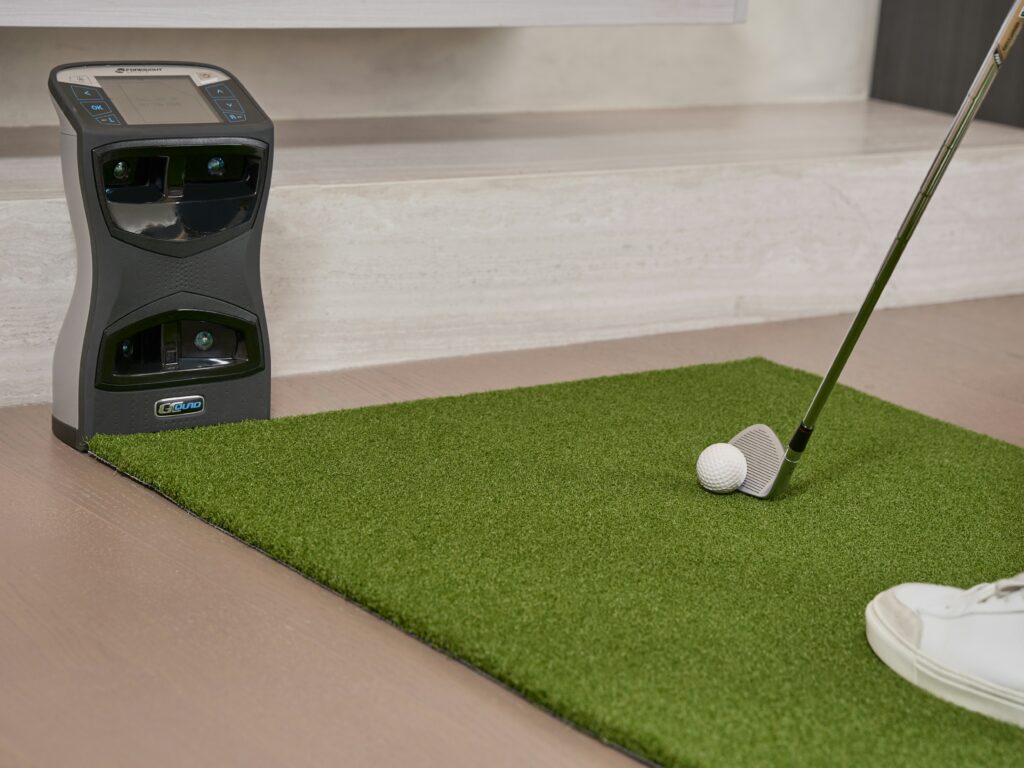
A golf swing analyzer measures:
- Club head speed
- Ball speed
- Launch angle
- Smash factor
- Shot dispersion
These metrics tell you what is happening. However, they do not explain why.
For example:
- Reduced club speed may reflect limited hip rotation
- Inconsistent dispersion may reflect thoracic stiffness
- Distance loss late in rounds may reflect endurance fatigue
At Full Strength Physical Therapy, we combine analyzer data with movement assessment.
Our TPI-informed screening evaluates:
- Rotational mobility
- Single-leg control
- Strength asymmetries
- Core stability
- Endurance capacity
If you want measurable golf performance gains, you need both data and proper biomechanics.
Frequently Asked Questions About Golf Performance
How do I improve golf performance after 40?
Focus on mobility, strength endurance, and joint protection. Improve hip rotation, thoracic mobility, and core stability. Combine movement assessment with performance metrics for best results.
Can physical therapy improve my golf swing?
Yes. Physical therapy improves the body mechanics that support your swing. Restoring mobility and strength enhances sequencing, reduces pain, and improves efficiency.
Why does my back hurt after golfing?
Back pain after golf often results from limited hip mobility or poor rotational sequencing. The lumbar spine compensates when hips and thoracic spine lack mobility.
Is a golf swing analyzer enough to improve performance?
No. A golf swing analyzer measures output but does not address movement limitations. Combining data with a physical therapy assessment produces better long-term results.
What exercises improve golf performance?
Effective exercises target:
- Hip internal rotation
- Thoracic rotation
- Anti-rotation core strength
- Single-leg stability
- Rotational endurance
A personalized program yields best outcomes.
The Smarter Path to Golf Performance
If you want to improve your golf performance, do not start by overhauling your swing. Start by upgrading the body that powers it!
The most common limitations we see at Full Strength Physical Therapy include:
- Restricted hip rotation
- Thoracic stiffness
- Core endurance deficits
- Asymmetrical load tolerance
Correcting these produces:
- Improved club head speed
- Better dispersion
- Reduced back tightness
- Consistent sequencing
- Longer-lasting rounds
Golf performance improves when movement improves. If you are serious about playing strong for decades, begin with a professional movement assessment.
Click Here to Book Your Assessment now. A TPI-certified physical therapist will schedule you for your one on one assessment.




Leave a Reply