
Are you tossing and turning at night, struggling with pain that keeps you from the deep, restorative sleep your body craves? We’ve all been there, and it’s no secret that poor sleep can significantly impact our daily performance and overall well-being.
But did you know that enhancing your sleep quality can be a powerful tool in managing pain and boosting your daily performance? Here are three easy, effective strategies to transform your sleep into a healing and rejuvenating experience.
1. Create a Sleep Sanctuary
Transform your bedroom into a haven for sleep. It’s not just about having a comfortable mattress and pillows (although those are important!). Consider factors like:
- Getting your room dark: Use blackout curtains to block out light, signaling to your body that it’s time to wind down. A cheaper alternative, a sleep mask like the one below can be another great option to help you unlock better sleep. Sometimes people report that a flat sleep mask wakes them because they feel their eyelashes hit the fabric if they blink in the middle of the night. The mask below has cups around the eyes to prevent this.

- Temperature: Keep your bedroom cool. The optimal room temperature for sleeping tends to vary slightly based on individual preferences, but generally, it’s recommended to be around 60 to 67 degrees Fahrenheit. This range is considered ideal for promoting good sleep because it helps to facilitate the natural drop in body temperature that occurs.
- Noise: If you can’t control outside noise, try a white noise machine or earplugs to create a calm, consistent sound environment.
Creating a peaceful, comfortable sleep environment is a simple, yet effective way to encourage deep, pain-reducing sleep.
2. Be Smart About When You Eat and Drink
It’s generally recommended to wait about 2 to 3 hours after eating before going to bed. This time allows your body to digest most of the meal. This can reduce the likelihood of discomfort or digestive issues like acid reflux and heartburn.
The exact time can vary depending on the size and composition of your meal. Larger or heavier meals might require more time to digest. Lighter meals might not require as long of a wait.
You probably know that caffeine is a stimulant. But you may not know how long it can affect your body. The research varies, but studies suggest avoiding caffeine anywhere from 8 hours to 4 hours before you go to bed.
Alcohol also has an effect on your sleep. While it may help you fall asleep faster, the quality of your sleep will be significantly worse. One study from 2018 showed the results below:
- Low amounts of alcohol: Having fewer than two servings of alcohol per day for men or one serving per day for women decreased sleep quality by 9.3%.
- Moderate amounts of alcohol: Having two servings of alcohol per day for men or one serving per day for women decreased sleep quality by 24%.
- High amounts of alcohol: Having more than two servings of alcohol per day for men or one serving per day for women decreased sleep quality by 39.2%.
The Whoop strap is one device people use to track their sleep. Below on the left you can see the data from a user who drank high amounts of alcohol and did not use a sleep mask the night before. On the right you can see the data for the same user when on a night there was no alcohol consumption and a mask was worn.
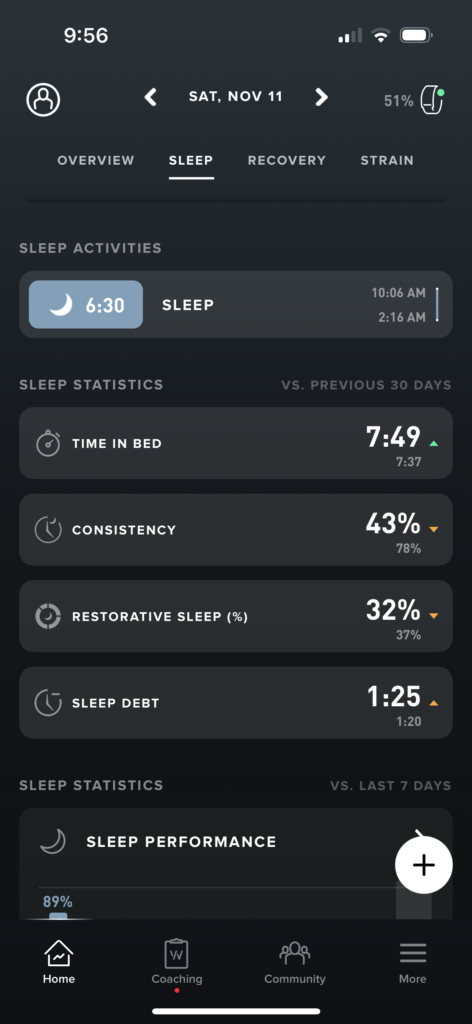
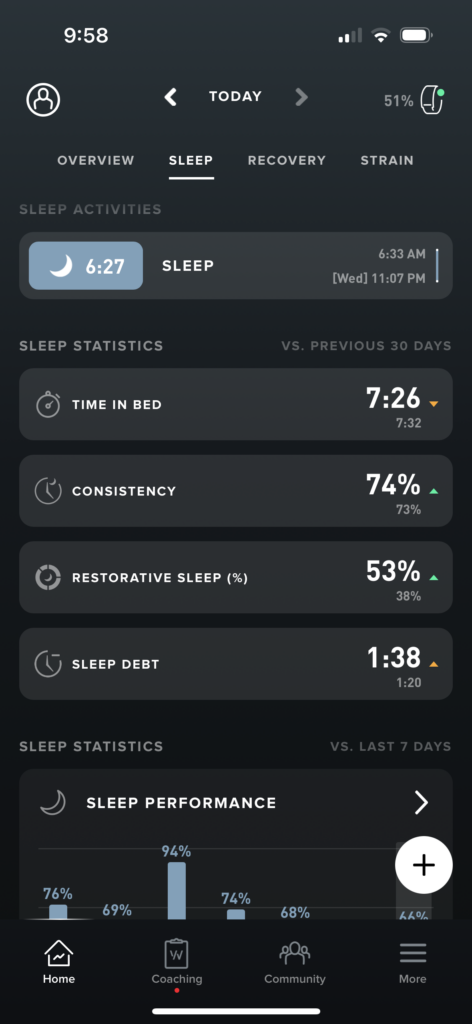
Restorative sleep is the amount of REM sleep and Deep Sleep that occurred during the night. Deep Sleep is when your body repairs tissue and heals. REM sleep improves memory and cognition. You can see that the Restorative Sleep is significantly higher on the right.
Remember, these strategies are not one-size-fits-all. What works for one person may not work for another. Improved sleep can be a key factor in managing pain and enhancing your daily performance. Sweet dreams!
If you‘re having trouble sleeping because of pain at night, we can help you!
At Solutions Physical Therapy & Sports Medicine in Alexandria and Springfield, VA, we’re experts at helping people understand why they hurt and creating a plan to solve it.
Call us at 703-299-3111, or click here to request an appointment.
A member of our team will schedule you an appointment with one of our expert physical therapists.
What happens if you don’t have a plan to get out of pain?
- You avoid playing sports with your friends because it hurts too much.
- You’re stressed and angry all the time because you are always in pain and not sleeping well
- You stop exercising altogether and become more likely to get other diseases and injuries
But with a plan to get out of pain you can live the confident and active life you want.
If you want an expert to listen to your unique problems and guide you to success, a Solutions Physical Therapy & Sports Medicine physical therapist in Alexandria or Springfield, VA will create a plan specifically for you.
You’ll feel confident that you have the knowledge and ability to stay active and do all the things you want.
Call us at 703-299-3111, or click here to schedule your appointment and get started.
Working to keep you living your best life,
The Solutions Physical Therapy & Sports Medicine Team