Injuries to youth athletes can be stressful for the child who can’t play as well as for parents who see their young athlete struggling with pain. Injury during skeletal development, such as growth plate injuries, can lead to long-term skeletal growth problems. Overuse conditions can potentially lead to significant long-term disability. While injury is always a risk when playing sports, there is a growing amount of research on the risk factors and how you can reduce them.
Risk Factor #1: Early Sports Specialization
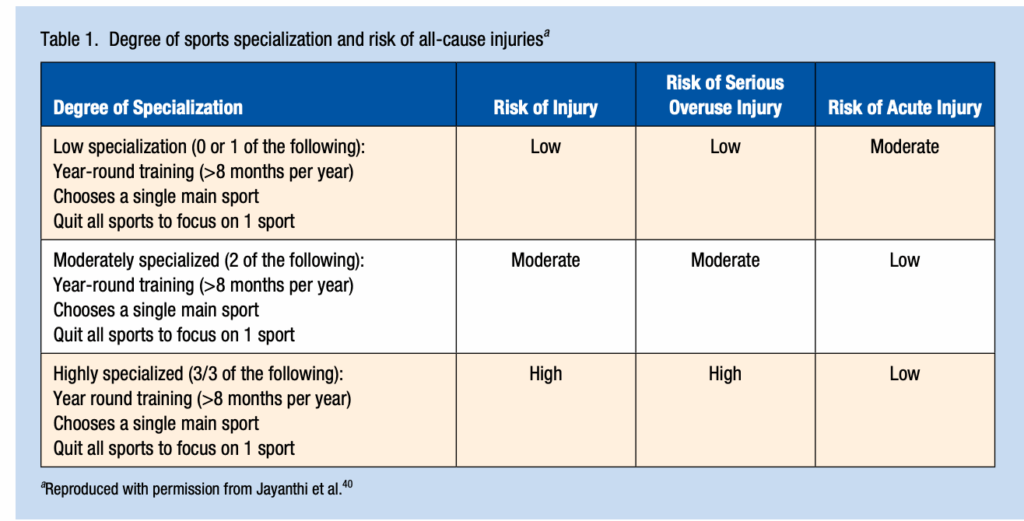
There are a number of things that can increase your child’s injury risk. Sports specialization during your child’s growing years is one of them. Sports specialization is defined as the following:
- year-round training (greater than 8 months per year)
- choosing a single main sport
- quitting all other sports to focus on 1 sport.
The degree of specialization is positively correlated with increased serious overuse injury risk.
In one study, baseball pitching more than 8 months per year resulted in 5 times the odds of sustaining an elbow or shoulder injury that required surgery. Pitching on multiple teams or consecutive days increased the odds of injury by up to 7.9 times.
How to reduce sport specialization risk
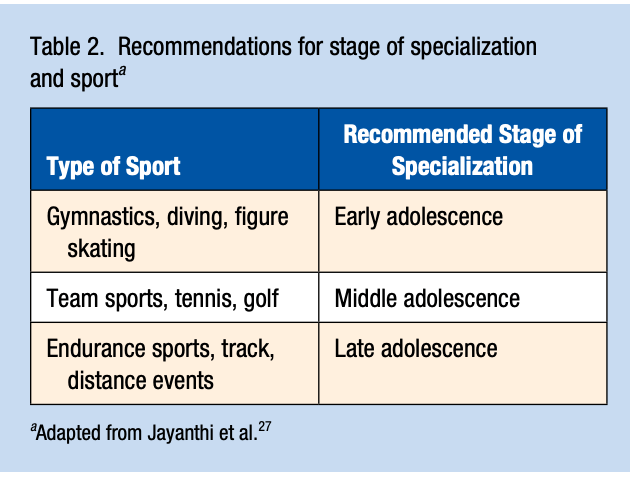
You can reduce your child’s sport specialization risk by making sure they don’t specialize too early. Recommendations vary by sport, since the peak competitive years for some sports (like figure skating and gymnastics ) happen earlier in life.
In addition, specializing in one sport earlier doesn’t increase the odds of becoming an elite level athlete. A study of more than 1500 German national athletes in all Olympic sports reported that those who achieved the international level started training in their main sport at an older age. This study also found that, on average, these athletes participated in 2 other sports prior to or at the same time as their main sport. These athletes also continued in other sports to a later age. Importantly, adolescent success did not predict senior-level success.
At the collegiate level, a study of National Collegiate Athletic Association (NCAA) Division 1 athletes at 1 university found that 70% did not specialize in their sport until at least age 12 years. In the same study, 88% had participated in more than 1 sport. Overall, these university athletes specialized at an older age compared with students at the same university who were not NCAA athletes (mean, 15.4 vs 14.2 years).
The same study also found that more than 40% had a parent who had competed at the collegiate or professional level. This suggests that genetic factors play a large role in long-term athletic achievement.
Risk Factor #2: Inadequate physical fitness and coordination
Despite the increasing number of youth sport participants, numerous studies show that today’s kids have a lower level of motor skill competency, muscular fitness, and cardio fitness. Some researchers examined trends in muscular fitness and found declines in the following physical fitness tests in school age children:
- bent-arm hang
- sit-up performance
- handgrip strength
- shuttle run performance
- trunk flexibility
How to reduce physical fitness and coordination risk
Improving your child’s general physical fitness and coordination can be done in many ways. Reducing screen time and encouraging physical activity that is not sport specific can help. Even a short period of general physical fitness and coordination added as a warm up before sports practices can reduce injury risk.
One example is the FIFA 11+ injury prevention program. This program was designed to prevent soccer injuries in athletes 14 and up. It involves 20 minutes of running, plyometric and balance exercises. You can find the whole program here and here. Doing this program at least twice a week was enough to reduce injury risk by 30% in athletes as young as 13.
How Physical Therapy Can Help
If your child has suffered from sports injuries, we can help! A Solutions Physical Therapy & Sports Medicine physical therapist can perform a thorough evaluation to identify what your child’s biggest risk factors are. We can create a plan to reduce those risk factors and keep your athlete in the game!
Call us at 703-299-3111, or click here and a member of our team will schedule an evaluation with one of our expert physical therapists.
Working to keep you living your best life,
The Solutions Physical Therapy & Sports Medicine Team