Chronic pain can be one of the biggest limiting factors in life. Sleep, exercise, work, and your social life can all become stressful and difficult because of this persistent pain. One of the big causes of chronic muscle and joint pain is trigger points.
What are trigger points?
A trigger point is an area of muscle that becomes hypersensitive and irritable. When this happens, it can cause an aching pain and a feeling of constant tightness in the affected muscle at rest and sometimes sharp and intense pain when the muscle is being used.
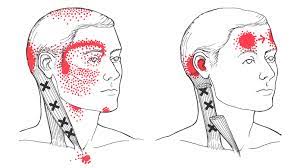
These trigger points can also refer pain to other areas of your body. For example, a trigger point in your neck can refer pain to your shoulder or your head and a trigger point in your thigh can refer pain to your knee.
The picture below shows an example of trigger point pain referral patterns. The “X” marks the location of the trigger point and the red areas represent the areas of referred pain.
Trigger points can be caused by a number of things. Often, they happen when a muscle is needed to work harder than it is used to. For example, if you are running and increase your mileage too fast in too short a period of time, you may get a trigger point in one of your leg, thigh, or hip muscles.
Another trigger point cause can be overuse of a muscle due to bad movement patterns and postures. If you work at a computer all day with bad posture, trigger points can develop in your shoulder, neck, and back muscles.
The 2-Step Trigger Point Solution
Getting rid of trigger points for good requires a 2-step approach:
- Treating the trigger point to relieve the pain
- Identifying the underlying cause of the trigger point so it doesn’t come back
You can sometimes treat the trigger point and relieve pain yourself at home. Stretching, foam rolling, self massage devices can all be used to relieve the pain from trigger points. One example in the video below is foam rolling the quad muscle. You can do this to help relieve thigh and knee pain.
If you’re doing it correctly, it should be sore but not excruciating. Only do this for 1-2 minutes per muscle and no more than 1-2 times per day. Too much can make the muscle more sensitive and make you hurt worse.
Identifying the underlying cause is the next step. Let’s say you just started running for exercise after taking a couple months off and you immediately ran 6 miles as your first run. That could have overworked your quad muscle and caused the trigger point. The foam rolling example above would be one way to work on resolving the trigger point.
To make sure you don’t get this trigger point again, you would want to do some quadriceps and hip strengthening exercises like the ones here. These will make sure those muscles are strong enough to run as far as you want. You would also want to start running again at a lower mileage, say 2-3 miles, and gradually work back up to 6 miles.
If you’ve tried some of the tips above and you’re still having pain or you’d like an expert opinion, we can help!
A Solutions Physical Therapy & Sports Medicine physical therapist can perform a thorough evaluation to identify what’s causing your pain.
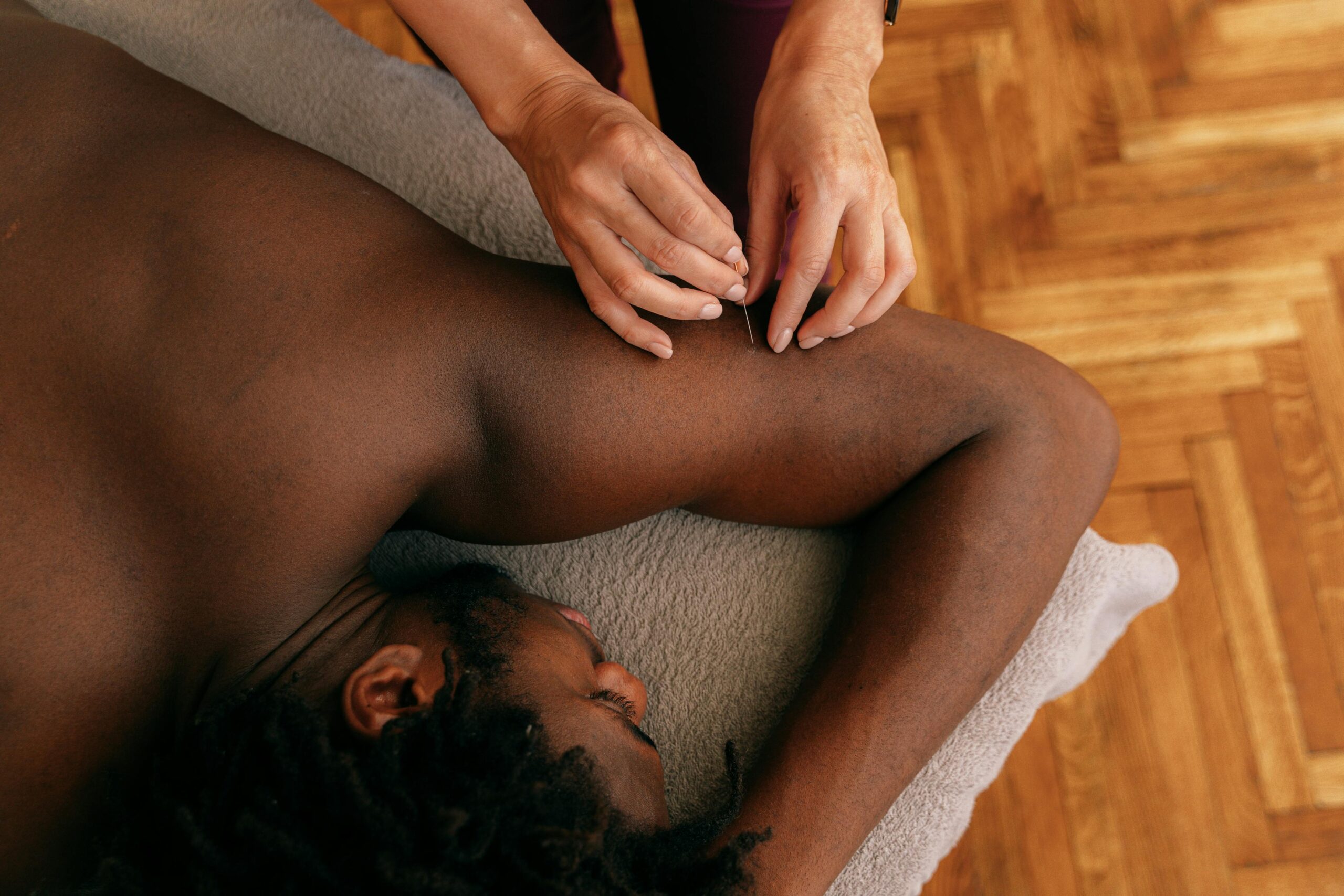
We can use specialized techniques like Graston technique and dry needling to address trigger points in ways you can’t get anywhere else.
Most importantly, we can show you how to keep trigger points from coming back so you can live your life without pain.
Call us at 703-299-3111, or click here to request an appointment.
A member of our team will schedule you an appointment with one of our expert physical therapists.
What happens if you don’t have a plan to stop trigger point pain?
- You can’t sleep because of constant pain
- You’re irritable around family and friends because of constant pain
- You stop exercising because of pain, leading to other diseases and injuries
But WITH a plan to stop trigger point pain you can live the life you want again.
The exercise and strategies above are a great way to get started. They don’t require a lot of time and are pretty easy to do correctly.
But if you want an expert to listen to your unique problems and guide you to success, a Solutions Physical Therapy & Sports Medicine physical therapist will create a plan specifically for you.
You’ll feel confident that you have the knowledge and ability to stop trigger point pain and do all the things you want.
Call us at 703-299-3111, or click here to schedule your appointment and start your path to healing.
Working to keep you living your best life,
The Solutions Physical Therapy & Sports Medicine Team