


You’ve been sidelined. The pain that started as a twinge has kept you off the trails, away from your group, and watching from the sidelines while everyone else logs miles.
Then one day, your doctor or physical therapist says the magic words: “You’re cleared to run.”
Relief floods in. But within a week, something feels off. Maybe you’re slower than before, your stride doesn’t feel smooth, or you’re favoring one side without realizing it.
That’s because being cleared to run and being ready to run strong are two completely different things.
Running physical therapy isn’t one-size-fits-all. There’s the phase where you heal from injury, and then there’s the phase where you rebuild your strength and get back to the runner you were. Many runners skip the second part…and pay the price.
Let’s break down why understanding both matters, and how you can know which phase you’re in right now, so that you can run stronger, faster, and injury-free.
Why Running Physical Therapy Covers Two Different Goals
When you injure yourself running, most people think there’s one job: fix the injury and get back to running.
But your body doesn’t see it that way.
Running physical therapy actually has two distinct purposes, and they require different approaches, different timelines, and different expectations.
The first is recovery. Your body needs to heal. Swelling needs to come down. Mobility needs to return. Pain needs to decrease. This is about getting back to baseline.
The second is performance. Once you’re pain-free and running again, your running form might still be compromised. Your strength might not match what it was before injury. Your confidence in your stride might be shaky. This phase is about getting back to your full capacity, not just pain-free running.
Many runners finish the recovery phase, feel “good enough,” and stop therapy. Then they hit a plateau. They can’t hit their old paces. They feel weaker than they remember. Or worse, they re-injure themselves because they never rebuilt the foundation.
This is why running physical therapy isn’t just about pain relief. It’s about getting you back to the runner you want to be.
Goal #1: Return To Running Again (Recovery Phase)
The recovery phase of running physical therapy is focused on one goal: restore function and eliminate pain so you can return to running safely.
In this phase, your physical therapist is addressing the specific injury. If it’s a calf strain, they’re working on mobility, reducing inflammation, and rebuilding the muscle safely. If it’s a knee issue, they’re identifying whether it’s a strength gap, a gait deviation, or both.
Recovery-phase work includes:
Mobility and flexibility. Getting your range of motion back so your joints move freely again.
Pain management. Using techniques like manual therapy, dry needling, or targeted exercises to reduce swelling and discomfort.
Early strengthening. Starting with gentle, controlled movements to rebuild muscle without aggravating the injury.
Gait retraining. Fixing movement patterns that may have contributed to the injury in the first place. Here are ways to improve your running form so that you can reach your full potential.
Gradual return-to-running progression. Starting with walk/run intervals and building back to continuous running safely.
The timeline for this phase varies. A mild strain might take 3–4 weeks. A more serious injury might take 8–12 weeks or longer.
The goal is clear: pain-free running at an easy, comfortable pace.
But here’s the catch. Once you hit that goal, you’re not done. Next, the running for performance phase begins.
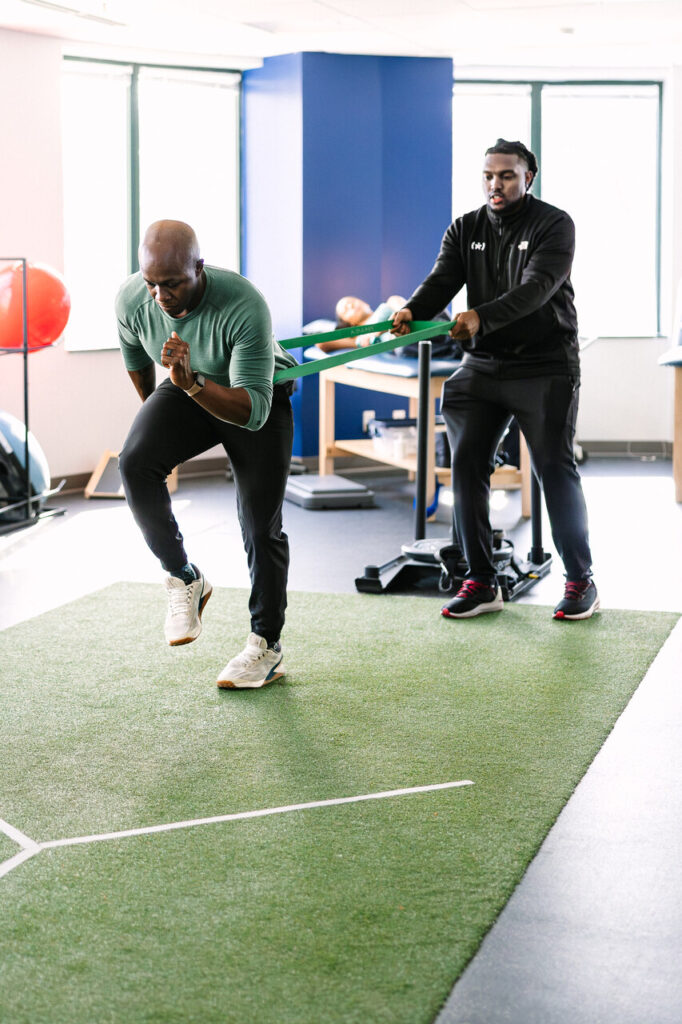
Goal #2: Run Stronger (Performance Phase)
After you’re running without pain, the performance phase begins.
This is where many runners get stuck or give up too early. The pain is gone. They’re running again. Why keep going to therapy?
Because pain-free and strong are not the same thing.
In the performance phase, your running physical therapy shifts focus. Now the goal is to rebuild your running strength, efficiency, and confidence so you can run at the pace and distance you did before injury…or better!
Performance-phase work includes:
Strength training. Building the power in your glutes, quads, hamstrings, and core so your stride is explosive and controlled. (Here are 3 Strength Exercises to Create a Solid Foundation for Running).
Running form optimization. Fine-tuning your gait so you’re efficient and less injury-prone. Small tweaks in cadence, stride length, or landing pattern can make huge differences. Here are the 5 Signs Your Running Form Is Setting You Up for Injury.
Sport-specific conditioning. Training at race pace, working on intervals, and building the aerobic capacity you need for your goals.
Confidence building. Progressive workouts that prove to you and your body that you’re ready for harder efforts.
Injury prevention. Addressing the underlying weaknesses or movement patterns that led to injury in the first place, so you don’t come back with a new problem. This usually starts with a running gait analysis: here’s What Actually Happens During a Running Analysis Performance Assessment.
This running performance phase often lasts 4–8 weeks, depending on how much strength you lost and how ambitious your goals are.
The result is a runner who doesn’t just feel better, but runs better: more PRs and more confidence that your body will continue to perform at its best.

How to Know Which Phase You’re In (And What You Need Next To Reach Your Goals)
So how do you know if you’re still in recovery mode or ready to move into performance training?
You’re in the recovery phase if:
- You have pain during or after running
- You can only run short distances before discomfort appears
- Your stride feels asymmetrical or weak
- You’re still dealing with swelling or stiffness
- You’re just getting back to easy, continuous running
You’re ready for the performance phase if:
- You can run 20–30 minutes at an easy pace with no pain
- Your pain has resolved or is minimal
- Your range of motion is back to normal
- You’re ready to increase intensity, speed, or distance
- You want to rebuild the strength and speed you had before injury
The transition between phases isn’t always clear-cut. Some runners are ready faster. Others need more time. This is where working with a physical therapist matters. They can assess your strength, analyze your running gait, and tell you honestly whether you’re ready to push harder or if you need more recovery work.
If you’re unsure where you stand with running physical therapy, an assessment is the fastest way to get clarity. A running-specific physical therapist can identify exactly what’s holding you back and create a plan to get you back to the runner you want to be.
The difference between a runner who gets stuck and a runner who comes back stronger often comes down to understanding these two phases and committing to both.
Click here to book your assessment now. A physical therapist who is also an expert in running will evaluate your current running capacity, identify any lingering weaknesses, and create a plan to get you running strong again.
What Runners Often Miss
Many runners treat the recovery phase as the finish line. They get cleared to run, do a few easy miles, and think they’re done.
Then they try to jump back into their old training. They push too hard, too fast. And either they hit a plateau where they can’t get back to their old speed, or they re-injure themselves.
This is why understanding running physical therapy as a two-phase process matters so much.
The runners who come back strongest are the ones who commit to both recovery and performance work. They don’t just want to run again. They want to run well.
That commitment is what separates a quick fix from a lasting return.
Running Physical Therapy Will Keep Your Running For The Long Term
Running physical therapy isn’t a one-and-done treatment. It’s a journey with two distinct phases.
The recovery phase gets you running again. The performance phase gets you running strong.
Both make a difference. Both take time. Both are worth the investment if you want to stay on the roads and trails you love.
If you’re currently recovering from a running injury, or if you’re cleared to run but something doesn’t feel quite right, don’t guess. Get an expert evaluation.
A running physical therapy assessment at Full Strength PT will show you exactly where you are in your return, what’s still holding you back, and what comes next so that you can run stronger and longer.






Leave a Reply