

Your golf swing power has dropped, even though you’re finally pain-free after injury. You’re not hitting the ball as far and you hesitate swinging at full power because you’re uncertain if your body can handle it.
That’s because being pain-free and being golf-ready are not the same thing. Injury disrupts how your body creates and transfers force through your swing. Muscles weaken, coordination breaks down, and your nervous system becomes protective.
But you don’t have to accept slower swings or lost distance. With the right exercises designed specifically for golf biomechanics, you can rebuild the power, strength, and confidence to play at your previous level.
At Full Strength Physical Therapy, our TPI Level 1 Certified therapist has worked with dozens of golfers stuck in this exact gap between “healed” and “confident.” The three exercises below are the same ones used in the clinic to help you reclaim swing power and get back to the game you love.
3 Exercises to Rebuild Golf Swing Power After Injury:
- Med-Ball Bounce Pass Slams (Half-Kneeling) to build rotational power and rapid force production
- Kettlebell Catch and Squat develops lower-body explosive power and ground-to-club force transfer
- Straight Arm Turns reinforce thoracic rotation and upper-body/lower-body separation
Each exercise targets a specific component of the kinetic sequence that injury disrupts, allowing you to safely rebuild clubhead speed and swing distance. Give 3-4 weeks of consistent exercise practice before returning to full-speed golf swings.
The Real Reason Your Golf Swing Isn’t As Strong After Injury (It’s Not What You Think)
After injury, your body has to relearn how to produce power. It’s not just about strength; it’s about speed, coordination, and the ability to rapidly generate and control force.
When you swing a golf club, you’re not just using your arms or shoulders. Power comes from a carefully timed sequence: the ground → your hips and core → your chest and shoulders → your arms → the club. Each segment has to fire in order, with each one building on the force from the one before it. Golfers call this “the kinetic chain,” and it’s what creates clubhead speed and distance.
An injury disrupts this chain. Even after pain resolves, the muscles involved in that sequence may have lost the ability to produce force quickly. Stabilizer muscles weaken. Coordination patterns get scrambled. Your nervous system becomes protective, unconsciously limiting how hard you can push.
This is where most golfers get stuck. They do general strength work: bicep curls, chest presses, random exercises…but they don’t specifically retrain the explosive, rotational, controlled movements that golf demands. They end up stronger but no faster. More stable but not more powerful.
The exercises below target the specific movement patterns your golf swing needs: rapid force production, rotational control, lower-body stability, and the ability to absorb and redirect force efficiently. They rebuild the neuromuscular connection that injury disrupted, so your body remembers how to create clubhead speed safely. If you want to understand exactly which movement limitations are sabotaging your swing, discover the two basic movement challenges that cause major golf swing problems and how to identify them in your own body.

The 3 Best Exercises for Golf Swing Power After Injury
Exercise 1: Med-Ball Bounce Pass Slams in Half-Kneeling Position
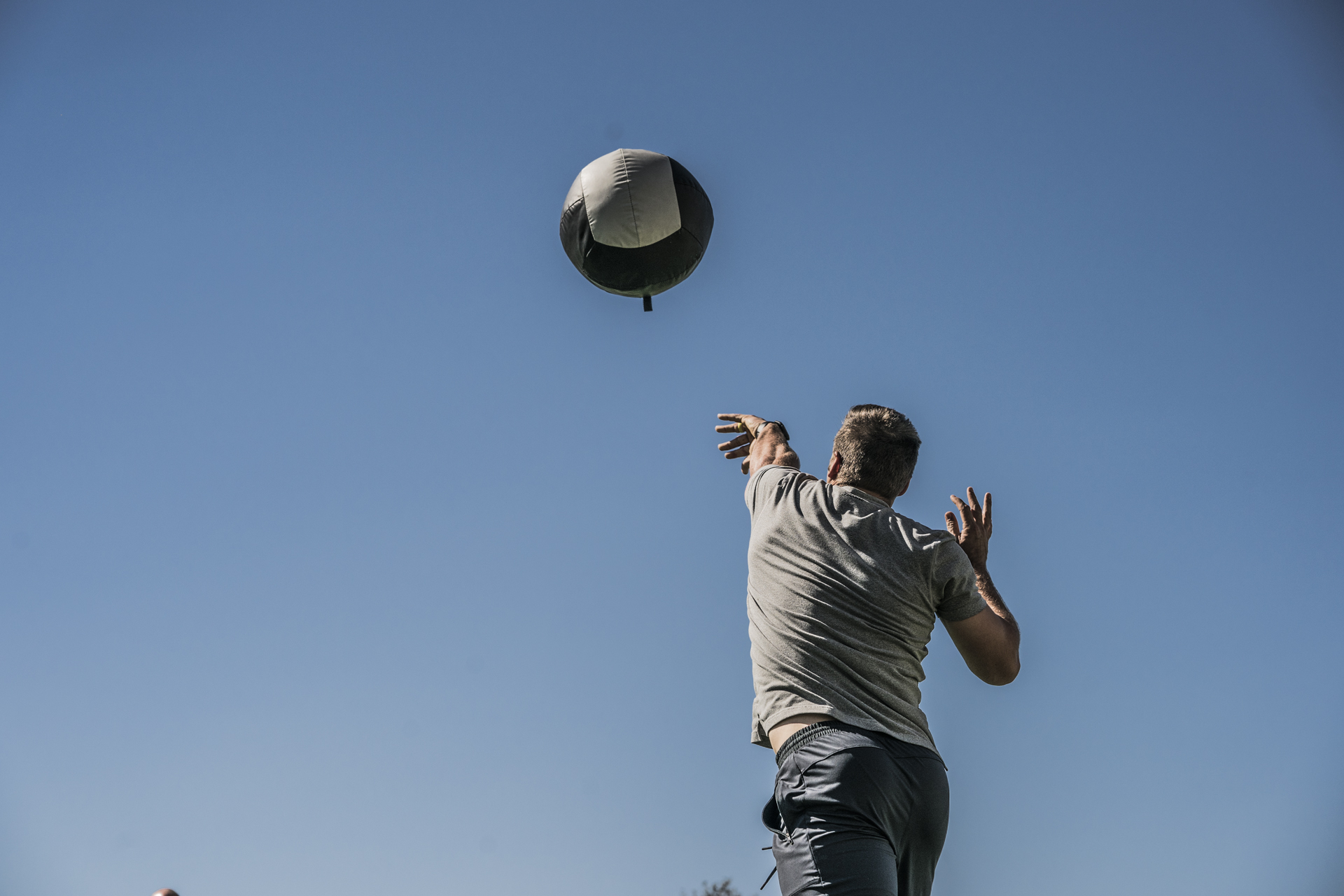
How To Do The Exercise: This is a dynamic, explosive movement where you hold a medicine ball in front of your chest, explosively rotate your trunk while in a half-kneeling position (one knee down, one foot forward), and forcefully slam the ball into the ground at an angle away from your body. The ball bounces back, and you catch it and repeat for reps.
Why it works for golf swing power:
The half-kneeling position is the key. By stabilizing one side of your lower body, this exercise forces your power to come from your hips, core, and thoracic spine (not from your legs compensating). This mimics the golf swing, where your lower body anchors the motion while your upper body creates rotational speed.
The explosive slam teaches rapid force production. Your body learns to accelerate explosively through a rotational pattern, which directly transfers to swing speed. The ball bounce also challenges you to absorb force quickly and redirect it, improving dynamic control and deceleration—critical skills for safely handling the rotational forces in your golf swing.
Because you’re working against gravity and the ball’s momentum, this exercise builds functional power without requiring heavy weights early in your return. It’s intense but controllable, making it ideal for golfers rebuilding confidence after injury. These strength gains can translate to improved body mechanics that directly enhance golf performance.
How to progress: Start with a lighter medicine ball and focus on smooth, controlled rotations. As confidence builds, increase the ball weight or add speed to the slam. The goal is to create power, not just effort.
Exercise 2: Kettlebell Catch and Squat
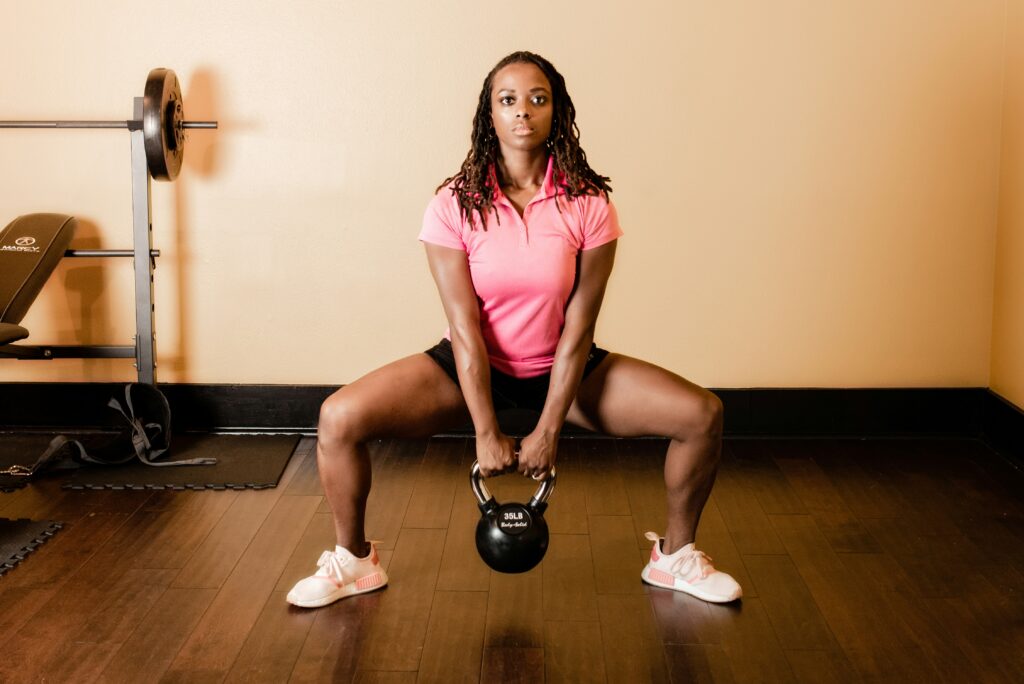
How To Do The Exercise: A kettlebell is tossed or lifted to chest height, where you “catch” it and immediately descend into a squat, then drive explosively back to standing. The catch happens quickly, then the squat follows, then the drive upward.
Why it works for golf swing power:
Golf is a ground-up sport. Power starts at your feet and legs, travels through your hips and core, and finishes at the club. The kettlebell catch and squat trains exactly this pattern: rapid force absorption in the lower body, explosive force production driving upward.
When you catch the kettlebell, your body has to instantly stabilize it and absorb the load. This “eccentric phase” is where your hips, quads, and core engage and get stronger. Then you explode out of the squat, training rapid, powerful extension—the same movement your legs need to drive energy into your golf swing.
This exercise also improves coordination and athletic variability. After injury, your nervous system can become rigid, relying on limited movement patterns. The kettlebell catch and squat forces your body to react, stabilize, and produce power dynamically, restoring the athletic responsiveness golfers need. Additionally, the explosive drive phase increases “rate of force development”—your ability to create force fast. This is what swing speed depends on.
How to progress: Start with a lighter kettlebell (12–16 lbs) and focus on smooth catching and controlled squats. As you gain confidence, increase the weight or the speed of the catch. Eventually, you can add a pause in the squat before driving up, increasing the difficulty.
Exercise 3: Straight Arm Turns
How To Do The Exercise: Standing with your arms extended straight out in front of you holding a TRX rip trainer parallel to the ground, you rotate your trunk side to side, keeping your hips relatively stable. The movement is controlled and focuses on upper-body rotation while your lower body stays anchored.
Why it works for golf swing power:
Straight arm turns reinforce thoracic rotation and trunk dissociation—the ability to separate upper-body movement from lower-body movement. This is fundamental to the golf swing. Your hips start the downswing, but your shoulders and thorax should continue rotating after, creating that elastic “lag” that generates clubhead speed.
The long-lever position (arms extended) increases the rotational demand through your core and shoulders. This challenges your trunk to work harder and teaches your body to control rotational forces efficiently. Unlike the explosive movements of the med-ball slam or kettlebell squat, straight arm turns rebuild rotational control and stability—equally important for power and injury prevention.
This exercise is especially valuable for golfers returning from injury because it reinforces proper sequencing without high external loading. You’re not throwing or catching anything. You’re just rotating, which allows you to focus on smooth, controlled movement patterns. This retrains your nervous system to separate upper and lower body movement, a skill that directly transfers to swing mechanics.
Additionally, improved thoracic rotation supports the philosophy behind How Physical Therapy Accelerates Sports Recovery and Performance, which emphasizes that targeted mobility and movement quality are essential for restoring both function and performance.
How to progress: Start with bodyweight-only rotations, focusing on smooth movement and equal rotation to both sides. As control improves, hold a light dumbbell or medicine ball in front of you while rotating, increasing the rotational demand. You can also progress by standing on one leg, adding balance for challenge and core engagement.
How to Rebuild Golf Swing Power After Injury (In 5 Steps)
1. Identify which movements hurt. Assess rotational, explosive, and loaded movements with a Physical Therapist.
2. Start with foundational exercises. Med-ball slams, kettlebell squats, arm turns (weeks 1–4)
3. Progress intensity gradually. Increase weight, speed, and complexity over 4–6 weeks
4. Add swing-specific practice. Short-game practice (week 5), then full swings (week 6+)
5. Monitor readiness markers. Pain-free movement, strength balance, rotational control, confidence
This progression prevents re-injury while rebuilding clubhead speed and distance.

Build Back Your Golf Swing Power for Distance and Consistency
Rebuilding power after injury isn’t just about doing exercises. It’s about understanding what “ready” actually means and progressing intelligently.
Many golfers make a mistake: they do strength work in the gym but don’t connect it to their swing. They get stronger but not faster on the course. Or they rush back to full swings before their body is truly prepared, and they re-aggravate the injury.
The exercises above are step one. They rebuild the fundamental capacity for power—the strength, speed, and coordination your body needs. But the next step is equally important: gradually applying that power to your actual golf swing.
The Progressive Return-To-Golf Timeline
After doing these exercises consistently (typically 3–4 weeks), you move to practicing your swing at 50% effort, then 75%, then gradually building back to full speed. You also practice short-game shots before full swings, building confidence with less rotational demand.
The concept of bridging from “healed” to “performance-ready” is explored in depth in The Difference Between Running Rehab and Running Performance Therapy, which explains how rehabilitation (pain relief and basic function) differs from performance training (restoring speed, power, and sport-specific confidence). The same principle applies to golf: you need both.
Throughout this progression, you monitor how your body feels. Soreness is normal; pain is not. If you feel sharp pain or instability, dial it back and reassess. For golfers dealing specifically with back pain during return to golf, these three exercises support a safer return to golf without back pain while maintaining your power-building momentum.
The goal isn’t just to be pain-free or to hit the gym numbers. It’s to get back on the course, feel confident swinging at full power without fear of setback, hit the ball as far as you used to, and to trust your body again.
This is where the work truly pays off: when you step up to the ball, take your swing, and hear that familiar crack of solid contact. The distance comes back and you stop thinking about the injury and just play golf.
Golfer FAQs
How long does it take to rebuild golf swing power after injury?
Expect 6–8 weeks with consistent exercise and progressive return to golf practice.
Can I rebuild distance after a shoulder injury?
Yes, with the right strength training and a guided return-to-performance protocol. Take a look at our golf performance program to get personalized support.
What’s the difference between being pain-free and golf-ready?
Pain-free means the injury has healed; golf-ready means your body can produce the speed, power, and coordination your swing demands.
Should I do all 3 exercises or can I pick one?
All three work together to rebuild the complete power sequence. Your PT can prioritize based on your specific limitations. Take a look at our golf performance program to get personalized support.
Rebuild Power in Your Golf Swing After Injury With This Foundation
It’s not about accepting slower swings or giving up distance. It’s about training your body to produce force the way a golf swing demands: explosively, rotationally, controlled, and safely.
The three exercises above (Med-Ball Bounce Pass Slams, Kettlebell Catch and Squats, and Straight Arm Turns) directly address the strength, power, and coordination that golfers need. They’re not random gym moves. They’re designed to retrain the exact movement patterns your swing requires.
But these exercises are just the foundation. To truly rebuild confidence and performance, you need a guided, progressive return-to-golf protocol. You need someone who understands golf biomechanics and can assess whether your body is actually ready for full swings. You need expertise, not guesswork.
Our TPI Level 1 Certified physical therapist works with golfers who’ve recovered from injury but want to bridge the gap between “healed” and “confident.” He assesses your movement, identifies your specific limitations, and creates a personalized plan to safely restore your swing power and get you back to playing the golf you love.
You’ve already done the hard part: you’ve recovered from injury. Now it’s time to rebuild what was lost and get back to the course stronger, faster, and more confident than before.
Ready to take the next step? Schedule a golf performance assessment with Alec, our TPI Level 1 Certified golf specialist, to find out exactly what your body needs to reclaim your swing power. Click Here to Book Your Assessment. You’ll get a clear plan personalized to what your body actually needs, not just a pile of drills to do.



Leave a Reply