Most golfers chase tips or new clubs, but the real limiter is often your body. Golf Performance improves when you can hinge, rotate, and stabilize your body in the right order.
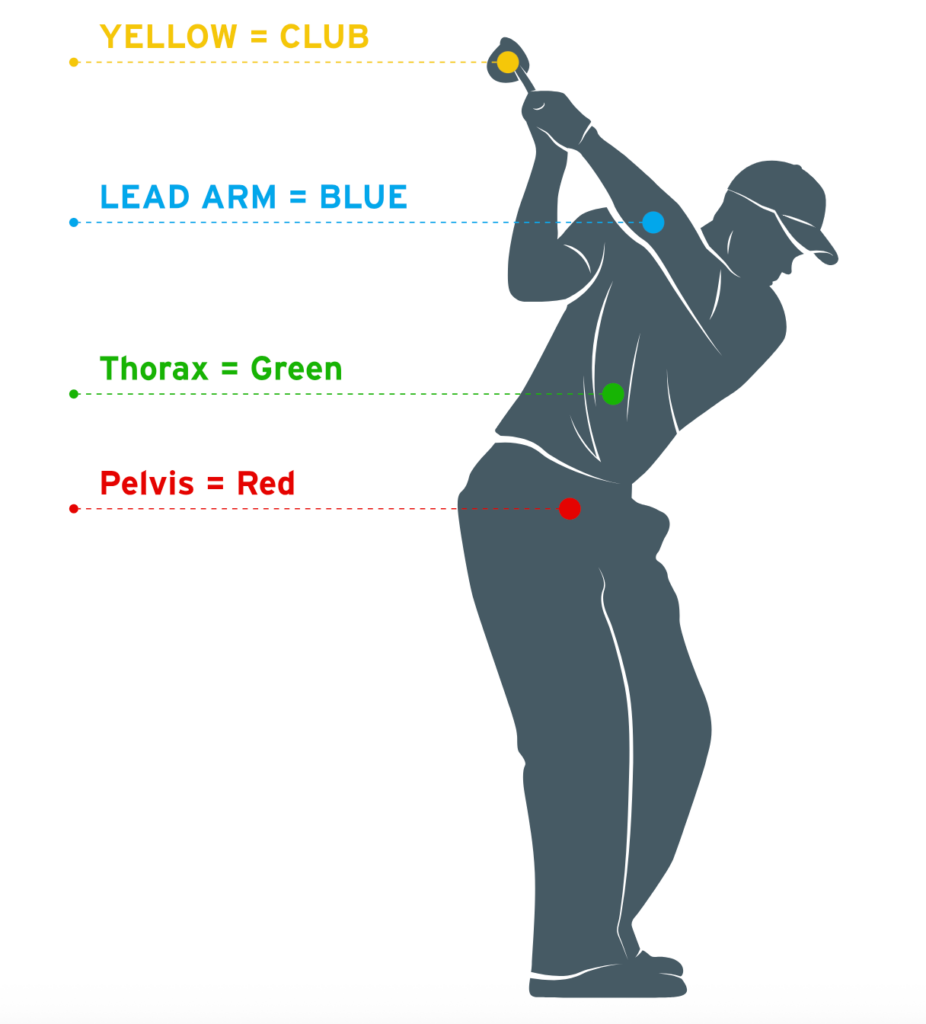
Great ball strikers create and pass speed from pelvis → thorax → arm → club, then slow down in that same order so energy flows cleanly to the ball. When one link can’t do its job, you compensate—and contact, speed, and comfort suffer. That’s the core problem we’re solving with movement-first Golf Performance work.
What “efficient” really means
The Titleist Performance Institute (TPI) sums up efficiency as repeatable, controllable, and powerful with the least effort. Two golfers can look different yet share the same kinematic sequence, which is why we focus on your movement, not one “perfect” model. Improve how you move, and Golf Performance gets easier—your sequence cleans up, and the club does more with less strain.
What a TPI golf assessment checks
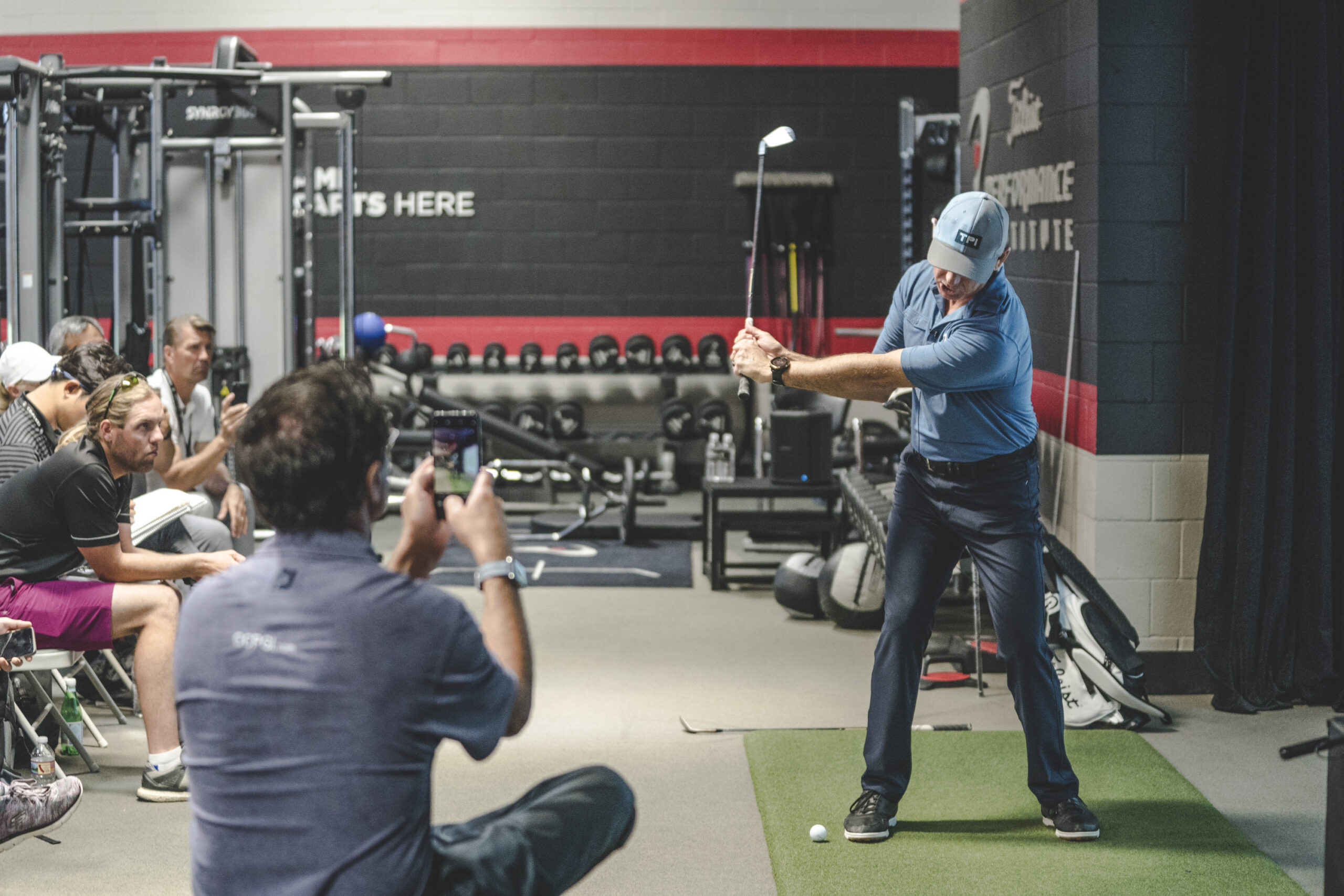
A TPI golf assessment screens 15 tests across five areas—core control, lower-body and upper-body dissociation, posture, and set/release of the club. With those results, you can adapt the swing to your current capacity or train capacity to match your swing goals. This keeps practice focused and progress measurable— pillars of smart Golf Performance.
Two simple at-home self-screens
Move in a pain-free range. If something hurts, stop and note it.
Pelvic Tilt Test (in golf posture)
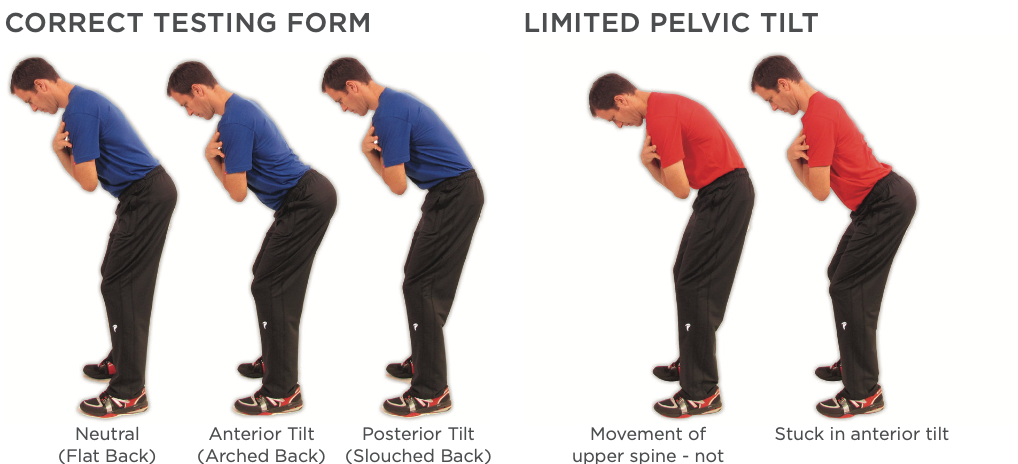
- Setup: Stand in a 5-iron stance, arms crossed, pelvis neutral.
- Do it: Tilt the pelvis forward (anterior) and back (posterior) smoothly without standing up or swaying.
- What it shows: A smooth tilt suggests good lumbar mobility and control. A shaky, limited tilt—or clear S/C-posture—points to mobility or coordination limits that can disrupt sequencing and power.
Bridge with Leg Extension (glute stability)
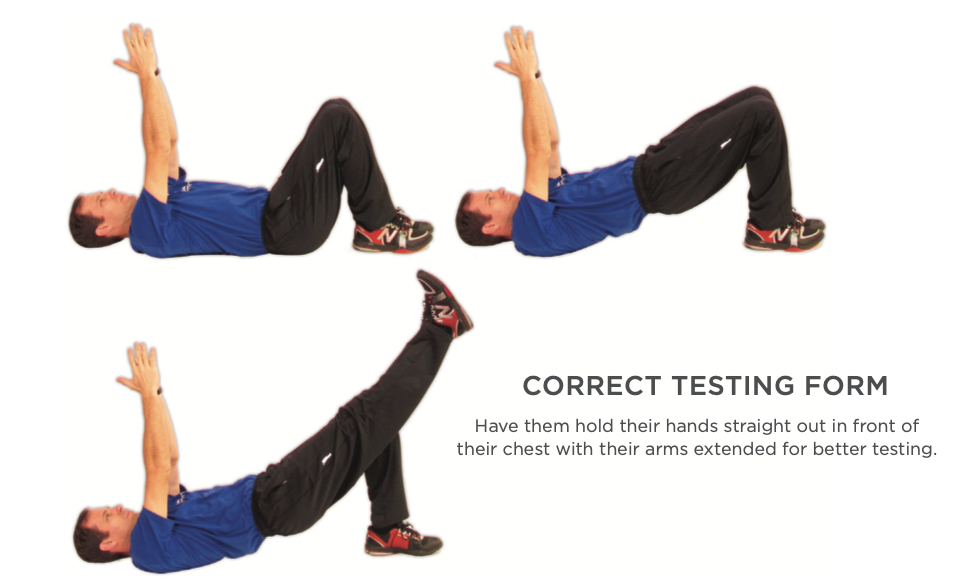
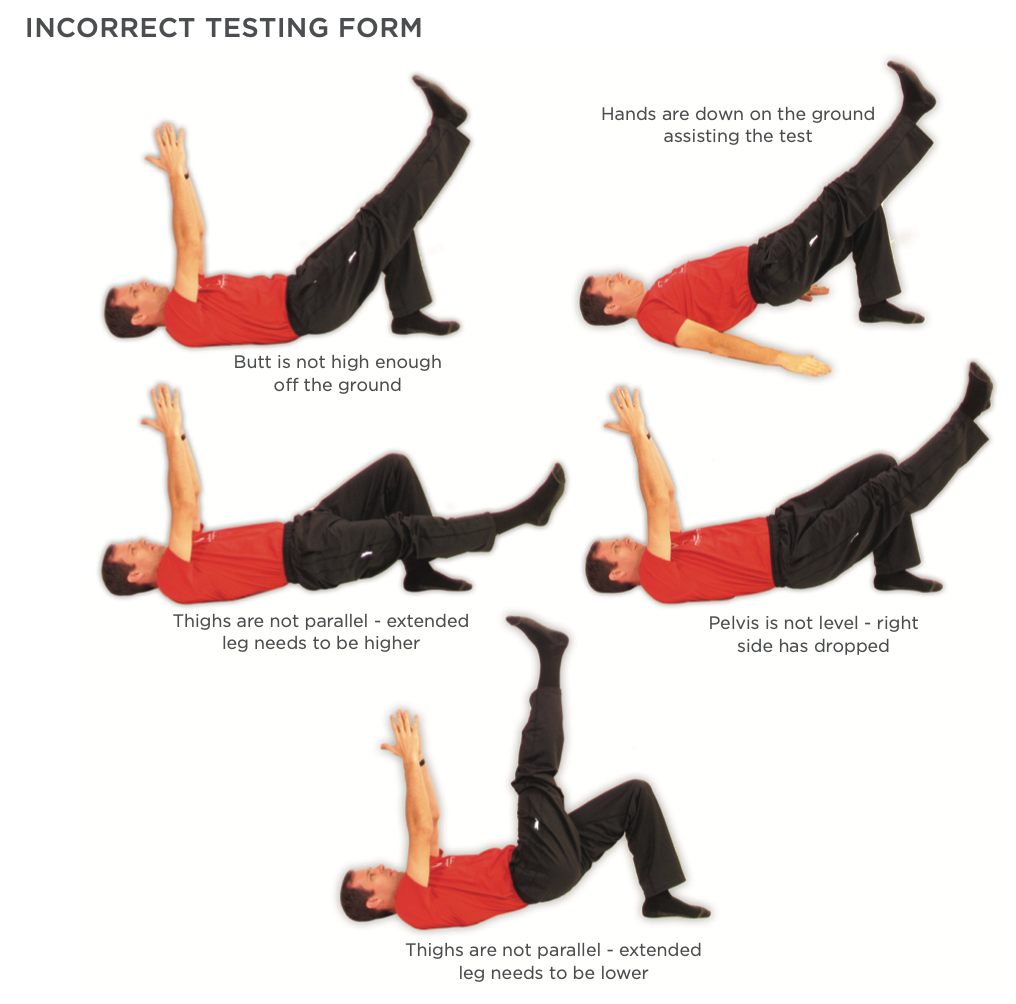
- Setup: Lie on your back, knees bent, feet together. Lift your pelvis and keep your “belt line” level.
- Do it: Extend the right knee and hold ~10 seconds; switch sides. If the pelvis drops or the planted leg shakes, that suggests glute instability on the support side. Hamstring or low-back cramping signals the glute isn’t doing its job.
- Why it matters: Stable glutes help you maintain posture and pass force up the chain—key drivers of Golf Performance.
What better movement changes on the course
When the pelvis can start—and then decelerate—on time, the thorax and arms can follow and pass speed cleanly, with the club peaking at impact. That ordered start and slow-down reduce effort while boosting speed and consistency. Simply put, more capacity equals better Golf Performance.
Proactively integrating ACL injury prevention exercises into daily practice boosts athlete confidence, improves performance, and helps ensure success, both now and for seasons to come.
Want to know what the biggest limiters are to your swing? We can help you!
At Solutions Physical Therapy & Sports Medicine, our TPI-certified physical therapists are experts at assessing your movements and developing a specific plan to improve YOUR swing. With 3 different options to choose from, there’s a solution that’s right for you.
Click Here to Book Your Assessment now.
A TPI-certified physical therapist will schedule you for your one on one assessment.
Don’t think you’re ready for a TPI golf assessment?
- Would you rather spend more time frustrated with your game?
- Do you want to waste money on another set of clubs that don’t help?
- Do you want to spend more time watching the latest YouTube video and still not get better?.
A TPI golf assessment can provide you the personalized plan designed for YOU and your body to help you perform your best!
DIY or generic home exercise plans can work. But if you want an expert to analyze YOUR individual movements and create a plan specific to YOU, a Solutions Physical Therapy & Sports Medicine physical therapist will create a plan specifically for you.
Click Here to Book Your Assessment now.
Working to keep you living your best life,
The Solutions Physical Therapy & Sports Medicine Team