

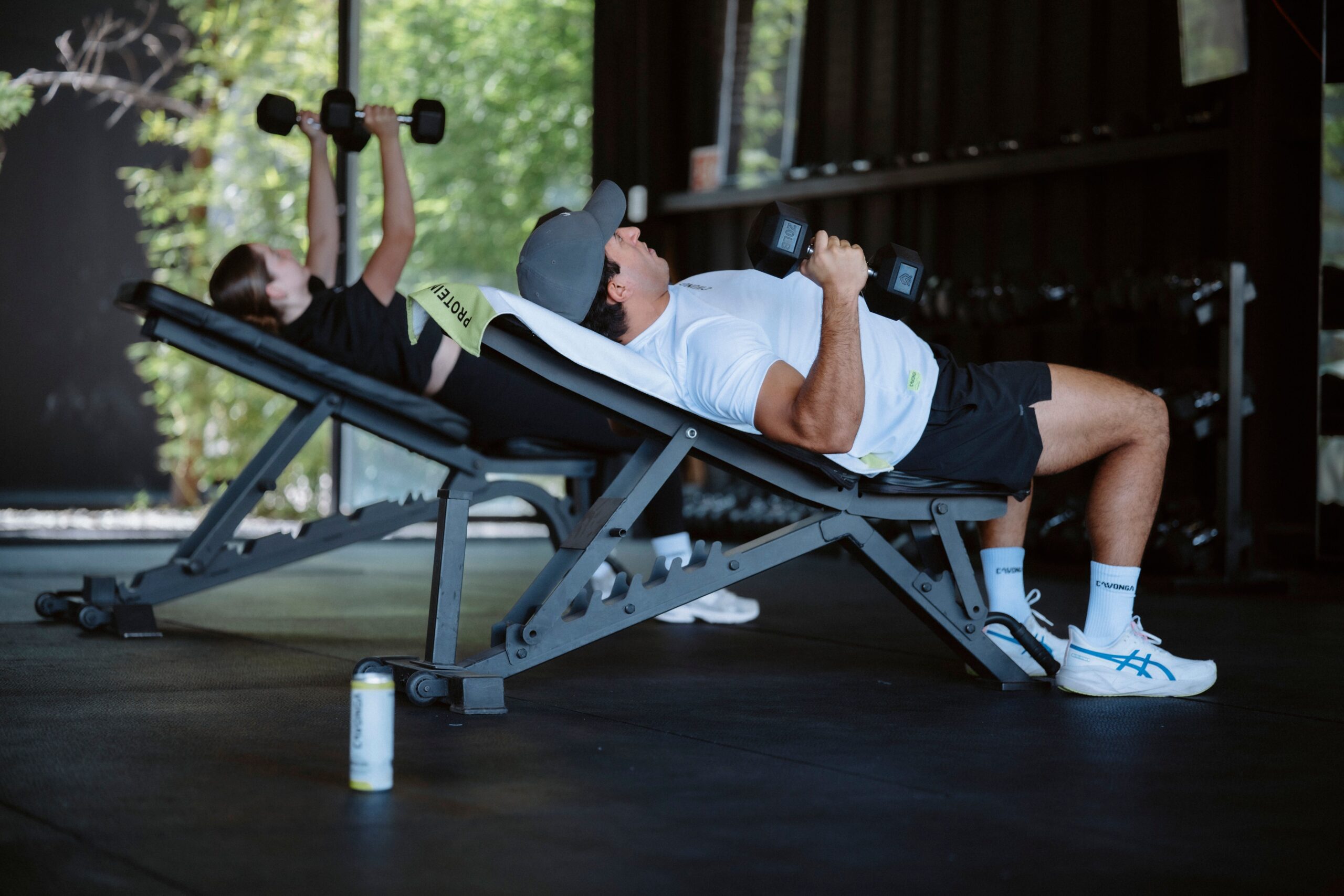
2 Exercises to Get Rid of Shoulder Pain From Bench Pressing
Nearly everyone on a strength program benches at some point, whatever their age or goal. If you’re dealing with shoulder pain on bench press, most of this pain traces back to one of two patterns:
- Experienced lifters who train hard on the bench press, but rarely rest
- Newer lifters who add weight faster on the bench press than their shoulder is ready for
Either way, the goal is usually the same: you want to keep training without losing progress. This article answers the most common questions our patients ask when their shoulder starts acting up during pressing work.
Our physical therapist Dr. Alec covers what’s actually causing the pain, the top two exercises help you keep lifting while it heals, and how to make sure it doesn’t come back. Whether you’re chasing a bigger bench max, working toward weight loss goals, or just want to press without wincing, this breakdown gives you a clear, physical therapist approved path forward.
What Causes Shoulder Pain on Bench Press?
Shoulder pain on bench press usually comes from one of two patterns: overuse in experienced lifters who never plan a lighter week, or newer lifters adding weight too fast before their form and tissues are ready.
The most common diagnosis behind shoulder pain on bench press that we see is subacromial pain syndrome, sometimes still called shoulder impingement. It’s irritation of the structures under the bony roof of the shoulder, mainly the subacromial bursa and the supraspinatus tendon, part of the rotator cuff. The long head of the biceps tendon often gets irritated at the same time, adding pain to the front of the shoulder.
A physical therapist will also screen for a few other possible causes:
- AC joint irritation, sometimes called weightlifter’s shoulder. Pain sits right on top of the shoulder and flares with wide grip bench and dips.
- Labral problems, more common in people with loose, mobile shoulders and former overhead athletes like swimmers or baseball players.
- Pec tendon injury, a sudden pop during a heavy rep followed by bruising and weakness.
- Neck referred pain, when pain runs below the elbow or comes with numbness or tingling.
Reaching overhead for dishes, sleeping on the sore side, reaching behind the back to put on a jacket, and long stretches at a desk can all flare the same irritated tissue. Let’s get you back to feeling good again, especially when this pain shows up in daily life too.
2 Exercises to Relieve Shoulder Pain on Bench Press
The top two exercises Dr. Alec recommends to let you keep pressing while you calm down an irritated shoulder are: an incline push-up progression and banded external rotation.
1. Incline Push-Up Progression
Start with push-ups on a barbell set in a rack at a height that feels pain free. Lower the bar gradually over several weeks, then move to floor push-ups and eventually weighted push-ups. On a bench, your shoulder blades are pinned in place. In a push-up, they can move freely, which usually makes this variation easier on an irritated shoulder while still training the same pressing pattern.
2. External Rotation for Rotator Cuff Strengthening
Start with side lying external rotation or banded external rotation with your arm about 45 degrees from your body. This matches a tucked pressing position and eases stress on the shoulder.
Once that feels comfortable, progress to prone 90/90 external rotation. Lie face down (prone) on your stomach. Bring your arms out to the sides so your elbows are aligned with your shoulders at a 90-degree angle and a 90-degree bend in your elbows as well. Keeping your elbows locked in line with your shoulders, rotate your forearms upward toward the ceiling until they are parallel to the ground.
Adjust Your Bench Press Technique
While you work through these, adjust your bench technique too. Tuck your elbows to about 45 degrees from your sides instead of flaring to 90, and keep your grip no wider than about 1.5 times shoulder width. This shifts more work to the triceps and takes stress off the front of the shoulder at the bottom of the rep. Floor presses or a neutral grip dumbbell press work well as a bridge exercise, since they limit how deep the shoulder travels.
Then, round out your routine with two at-home exercises that support the same pressing pattern without loading the irritated tissue directly:
- Band pull aparts for the muscles between your shoulder blades and rear delts.
- Push-up plus (an extra push at the top of a push-up) for the muscle that stabilizes the shoulder blades (serratus anterior).
If you want more exercises to support shoulder strength, try these 3 Exercises to Build Strong and Healthy Shoulders.
How to Stop Shoulder Pain on Bench Press From Coming Back
A few small changes to how you train protect your shoulder long after the pain settles down. Here’s what Dr. Alec recommends:
- Plan lighter weeks. For lifters coming back from shoulder pain, a deload every 3 to 4 weeks helps. Drop the weight to about 50 to 60 percent of normal and cut sets and reps roughly in half.
- Progress in small steps. Add weight in small jumps. Don’t max out or train to failure every session.
- Keep your form consistent. Elbows tucked, shoulder blades pulled back and down, controlled lowering on every rep.
- Keep the accessory work. Do rotator cuff and upper back exercises 2 to 3 times a week, and do at least as much pulling as pressing.
Watch for neck and upper trap pain too. This usually comes from shrugging your shoulders toward your ears under heavy weight, which also makes your shoulder less stable on the bench.
If your pain came with a sudden pop at the front of your chest or armpit during a heavy lift, that’s not something to manage with these exercises alone. See a doctor promptly, since that points toward a pec tendon injury rather than shoulder pain on bench press from overuse.
For ongoing shoulder pain that isn’t improving, Suffering From Shoulder Pain? Physical Therapy Can Help! covers common causes of shoulder pain and when it’s time to bring in a physical therapist.
Frequently Asked Questions About Shoulder Pain
How do I tell if my shoulder pain is a muscle or my rotator cuff?
The rotator cuff is actually a group of muscles, so the more useful question is whether your pain comes from muscle and tendon or from passive structures like the labrum and ligaments. A physical therapist can usually sort this out with a few simple tests, and that will tell you how long recovery takes and how your rehab gets planned.
Can you tear your rotator cuff doing bench press?
It is possible, but a sudden tear in a healthy shoulder is uncommon. More often, lifting brings on pain from a tear that was already there. These tears are common in adults over 40 who have no pain at all.
What could be mistaken for a rotator cuff tear?
A few conditions can look similar, including AC joint irritation (weightlifter’s shoulder), labral problems, pec tendon injuries, and even neck referred pain that runs below the elbow. A physical therapist screens for each of these before landing on a diagnosis.
Should I ice or heat a rotator cuff injury?
Use whichever feels better. Neither one speeds up healing. As a rule of thumb, heat before exercise can ease stiffness, and ice after exercise can calm pain that flared up.
What should I avoid when my rotator cuff hurts?
Don’t stop training altogether, and don’t push through sharp pain. Swap in pressing variations you can do comfortably and keep pain at 4 out of 10 or below during exercise. If the pain has settled by the next morning, the load was fine.
Will a torn rotator cuff get better without surgery?
Often, yes. Full thickness tears don’t heal on their own, but pain and function usually improve with rehab. In a large multicenter study (Kuhn et al., MOON cohort, Journal of Shoulder and Elbow Surgery, 2013), about 75 percent of people with non-traumatic full thickness tears avoided surgery for 2 years with physical therapy.
Most rehab programs run 6 to 12 weeks, and most people improve a lot, even if they aren’t completely symptom free. The exception is a sudden tear from an injury with obvious weakness. Those cases should see an orthopedic surgeon early, since timing matters for repair.
Ease Your Shoulder Pain on Bench Press And Stay On Track For Your Goals
Shoulder pain on bench press doesn’t have to mean stepping away from the gym. You can modify while you recover to still hit your goals, whether that is maxing your bench press or losing weight.
To help your shoulder pain on bench press, start with the two targeted exercises: an incline push-up progression and rotator cuff strengthening. These let you keep pressing while the irritated tissue calms down. Pair that with a tucked elbow setup, a moderate grip, and a deload every few weeks, and you protect your shoulder for the long haul.
If your pain isn’t improving, or you noticed a sudden pop during a heavy lift, don’t wait it out or guess your way through it. A physical therapist can pinpoint exactly what’s driving your shoulder pain on bench press and build a plan around your specific goals.
Click here to give us a call or fill out our contact form to get started today.






Leave a Reply