

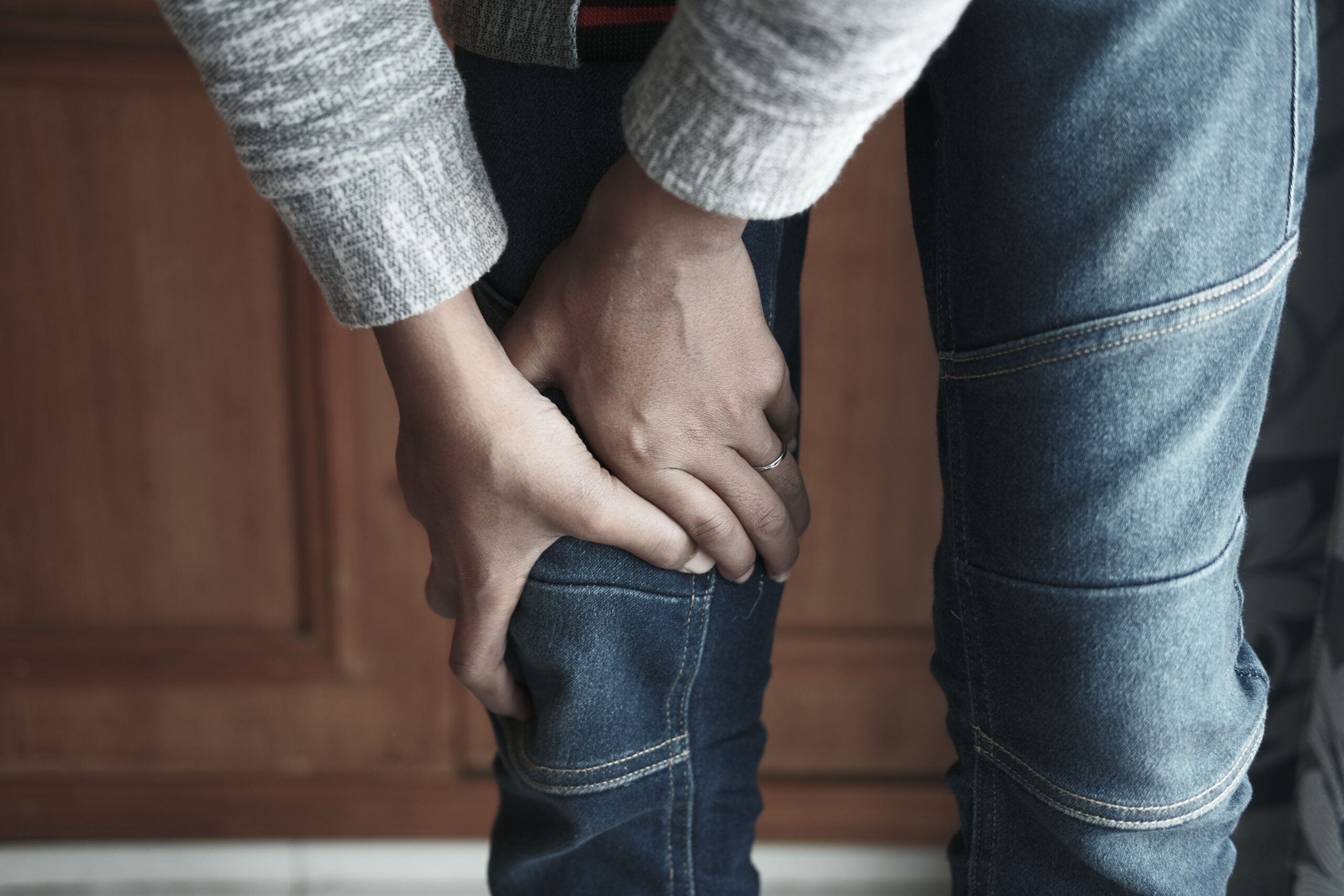
Knee pain going down stairs is one of the most common reasons people come in at Full Strength Physical Therapy, and it shows up in people who are otherwise active and healthy. Maybe it’s the walk down from your bedroom each morning or the stadium steps at your kid’s soccer game. Whatever the trigger, that sharp twinge or dull ache with every step down can make you start avoiding stairs altogether.
The good news is that knee pain going down stairs almost always has an identifiable, fixable cause. It is rarely about a knee that is simply “wearing out.” More often, it is about a knee that does not yet have the strength, control, or mobility to handle the specific demands of descending stairs.
In this article, we’ll break down why this happens, why going down often hurts more than going up, what you can do about it starting today, and when it’s time to bring in a professional and see a physical therapist. Whether you’re a weekend athlete, a parent chasing kids around, or someone simply wanting to move through daily life without nagging pain, this guide is built for you.
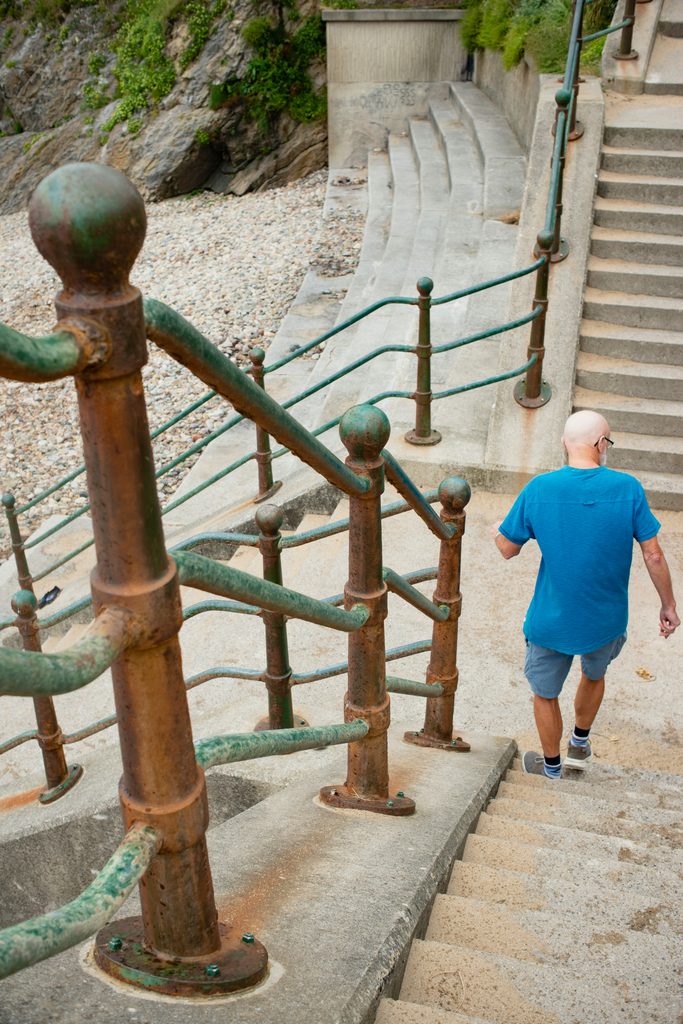
What Causes Knee Pain Going Down Stairs?
Knee pain going down stairs rarely comes from one single cause. It is almost always the result of several factors working together, which is why two people with the same complaint can need completely different treatment plans.
The most common contributors we see in the clinic include irritation around the kneecap, decreased quadriceps strength, hip weakness, limited ankle mobility, and reduced balance or control through the leg. Sometimes arthritis or other joint changes play a role too, especially for adults over 40. In many cases, the person has simply increased their activity level faster than their knee was ready to handle.
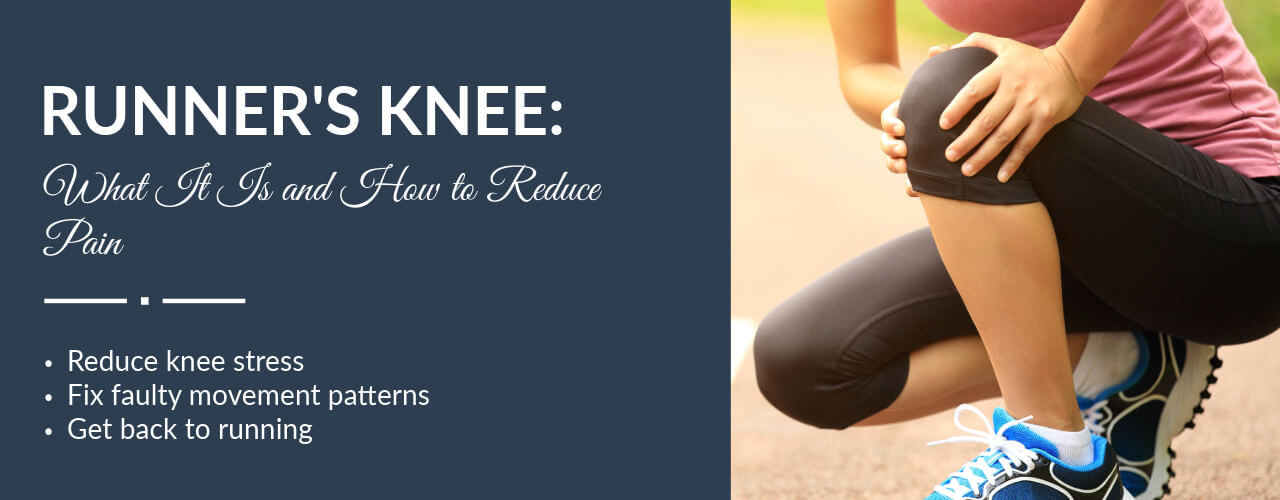
This is why the more useful question is not “where does it hurt?” Instead ask “why is this particular knee struggling with this particular activity?” Dr. Maggie at Full Strength Physical Therapy explains that “a knee that hurts on stairs because of quad weakness needs a different plan than one struggling because of hip control or ankle stiffness.” If you’ve noticed pain specifically around or under the kneecap, this may point toward patellofemoral pain syndrome, a condition we treat often and one worth understanding in more depth.
Research published through the Journal of Orthopaedic & Sports Physical Therapy consistently supports a multi-factor approach, targeting quad strength, hip strength, and movement mechanics together rather than isolating the knee alone.
Why Stairs Hurt Going Down, But Not Going Up
Going downstairs asks your quadriceps to control your body weight as you lower onto each step, which is a different demand than climbing up. This is one of the most common patterns we hear about in the clinic: “Going up is fine, but coming down is what gets me.”
The reason comes down to how your muscles work. Climbing up requires your leg muscles to shorten and produce force (concentric contraction). Descending requires the opposite: your quadriceps have to lengthen while still producing force to control your descent (eccentric contraction). This eccentric demand places a significantly higher load through the front of the knee and around the kneecap specifically.
Here’s what Dr. Maggie typically sees in our clinic:
If your quadriceps do not have enough strength or endurance to control that lowering motion well, the knee ends up absorbing more stress than it is currently prepared to handle. Over time, that repeated overload is exactly what produces the pain and irritation many people feel with stairs, hills, or even standing up from a low chair.
Understanding this distinction changes how you approach fixing the problem. Strengthening exercises that focus purely on concentric strength, like leg presses without a controlled lowering phase, may not fully address what is actually causing your knee pain going down stairs.
How to Ease Knee Pain Going Down Stairs in Daily Life
The right starting point depends on what is driving your specific knee pain, but quad and hip strengthening exercises are a common foundation. A few go-to exercises we recommend often include:
- sit-to-stands
- mini squats
- step-ups
…and eventually controlled step-downs once you can tolerate them. Bridges and side-lying leg raises are also useful, since hip strength plays a major role in controlling knee position during movement.
Start with exercises that do not significantly increase your pain. A little discomfort during or shortly after exercise can be normal, but pain that keeps climbing or symptoms that worsen over several days are signs to scale back and reassess. Progress gradually, adding repetitions, resistance, or range of motion only as your knee tolerates it well.
It’s also worth resisting the urge to completely avoid stairs while you work on strength. Movement is important for recovery, and temporarily modifying how much and how often you take stairs is usually more effective than avoiding them entirely.
For a full walkthrough of accessible strengthening exercises you can start today, check out our guide to 3 Simple Exercises to Get Out of Knee Pain, which builds on many of the same principles covered here.
When Knee Pain Going Down Stairs Needs a Professional Evaluation
Pain does not automatically mean there is serious damage, but certain signs mean it is time to get evaluated sooner rather than later. Seek care promptly if you’ve had a significant injury or trauma, cannot comfortably put weight through your leg, notice your knee giving way or locking, have significant swelling, or your symptoms are rapidly getting worse instead of better.
Persistent knee pain going down stairs that isn’t improving despite rest and basic home exercises is also worth having evaluated, even without a dramatic injury. You don’t have to wait until knee pain becomes severe before asking for help.
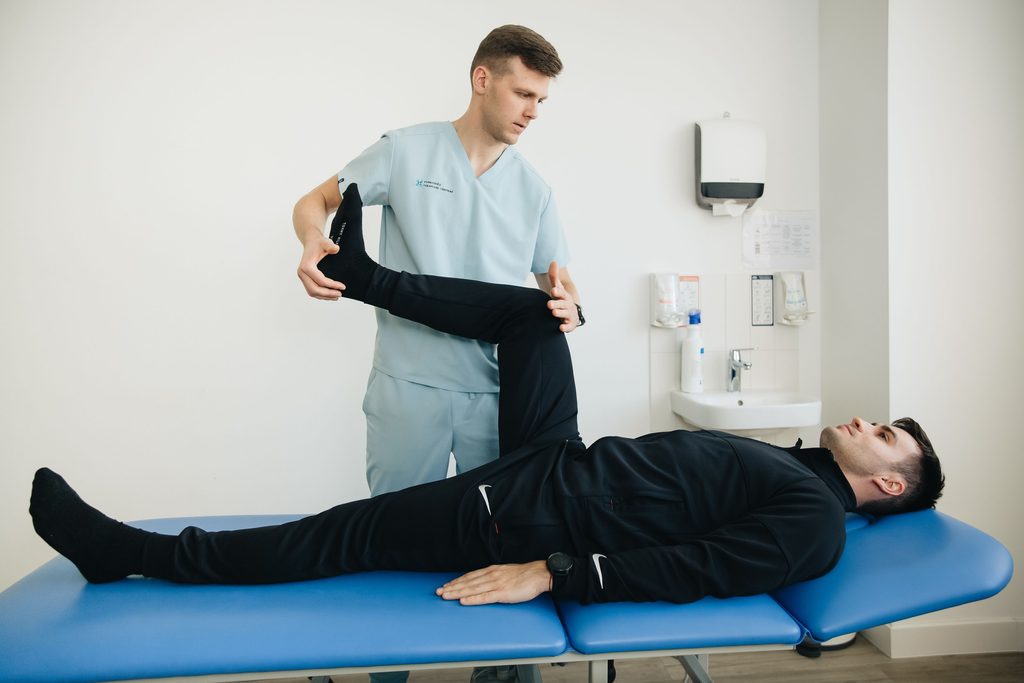
A physical therapist can evaluate more than just the knee itself. We look at ankle mobility, hip strength, balance, and how you move overall, since all of these can contribute to why your knee is struggling with stairs specifically. That comprehensive view takes you beyond temporary relief to a lasting fix.
Daily Life Without Knee Pain
Knee pain going down stairs can feel limiting, but it is rarely a life sentence. In nearly every case we see, the knee simply needs more strength, better control, or improved mobility to meet the demands you’re asking of it, and those are things that can be built with the right plan.
Whether your pain started after a specific injury or crept in gradually over weeks or months, understanding the why behind your symptoms is the first step toward lasting relief. From there, a combination of targeted strengthening, smart activity modification, and expert guidance can help you get back to stairs, hikes, and everyday movement with confidence.
You don’t have to guess your way through YouTube videos or push through pain hoping it resolves on its own. Our physical therapists specialize in identifying exactly why your knee pain going down stairs is happening and building a plan specific to your body and your goals.
Click Here to Book Your Assessment now. A physical therapist will schedule you for your one on one assessment.
Frequently Asked Questions
Is walking good if you have knee pain?
In many cases, yes. Movement is generally a good thing, and avoiding activity altogether usually isn’t the answer. What matters is how your knee responds during the walk and afterward. Mild discomfort that settles quickly is often fine, but progressively increasing pain, noticeable limping, swelling, or symptoms that linger afterward are signs to scale back. The goal is finding the right amount of activity for what your knee can currently handle, then gradually building from there.
How do I know if my knee pain is serious?
Pain alone doesn’t always mean there is serious damage. However, you should get evaluated sooner if you’ve had a significant injury or trauma, can’t comfortably put weight through the leg, notice the knee giving way or locking, have significant swelling, or symptoms are rapidly getting worse. Persistent pain that isn’t improving is also worth having checked out. You don’t have to wait until it becomes severe to ask for help. Get long-term solutions in this blog article.
Does knee pain mean I’m causing more damage every time it hurts?
Not necessarily. Pain and tissue damage aren’t always the same thing. Pain is information from your body letting you know something needs attention, but it doesn’t mean every twinge is causing additional harm. Many people also assume they simply have “bad knees,” but more often the knee just doesn’t yet have the strength, mobility, or capacity for what’s being asked of it, and that’s something that can usually be improved with the right plan.
Do I just have bad knees?
Dr. Maggie says “I try to get people away from thinking of their knees as permanently “bad.” In many cases, what we’re dealing with is a knee that currently doesn’t have the strength, mobility, or capacity for what we’re asking it to do. Those are things we can often improve.”
If going downstairs hurts, our goal isn’t simply to tell someone to avoid stairs forever. We want to figure out why stairs are difficult and then build the strength, mobility, and confidence they need to get back to doing them comfortably.
What are the most common mistakes people make when trying to fix knee pain going down stairs?
One of the biggest mistakes is going to an extreme, either avoiding the stairs completely out of fear or pushing through worsening pain expecting it will just get stronger. Another common mistake is focusing only on the knee itself, when hip strength, ankle mobility, balance, and overall movement mechanics often play a role too. It’s also worth remembering that one exercise that worked for someone else online may not address what’s actually causing your pain. Our article on What Causes Knee Instability and How Can You Improve Stability? breaks this down further.





Leave a Reply