

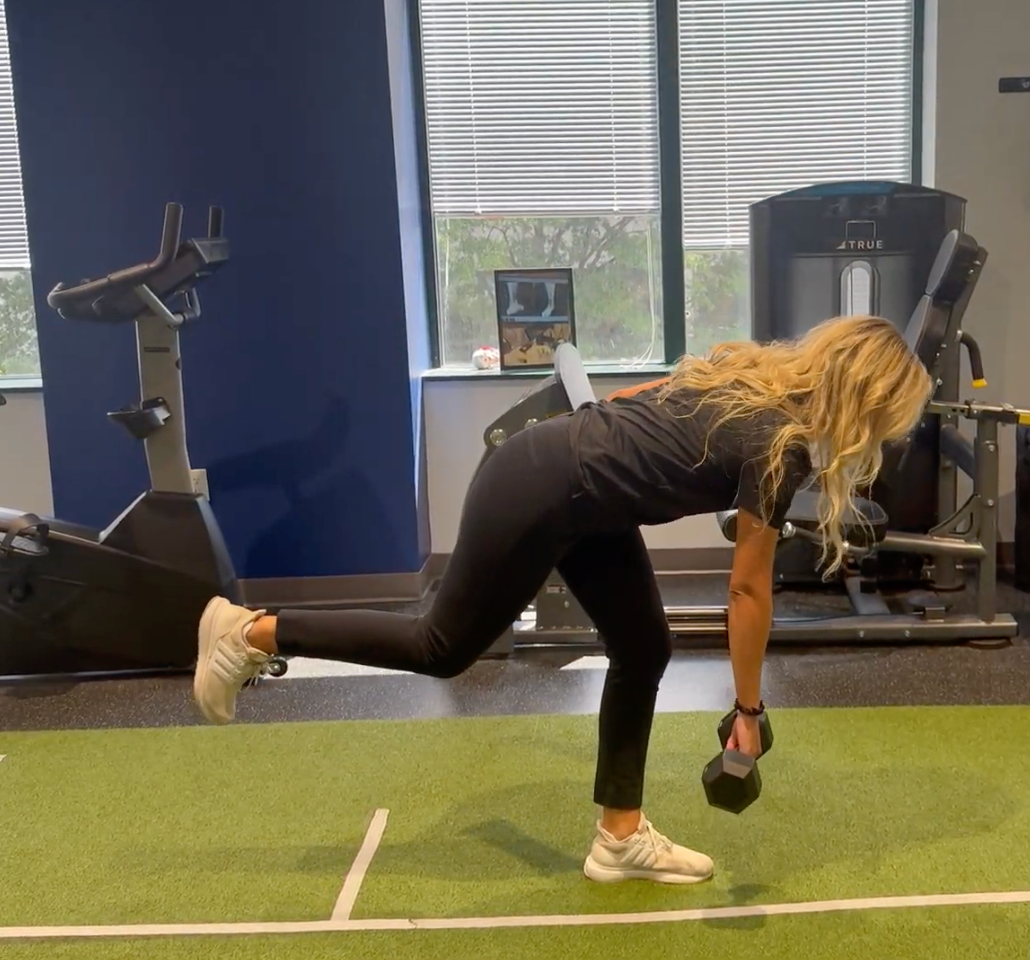
Strength exercises for runners training for a marathon are not an optional extra. Strength training is necessary if you are logging 30, 40, or 50 miles a week. If you’re wondering whether lifting will slow you down or help you finish stronger, you are asking the right question. The short answer, backed by research, is that strength training makes marathoners more resilient.
This guide breaks down exactly why strength work matters for marathon runners, three specific exercises to add to your training block, how they help you run faster without burning out, and how to tell the difference between normal training soreness and the early stages of an injury. Whether you are training for your first marathon or your fifteenth, these strength exercises for runners are designed to fit around your mileage, not compete with it.
[Image Placeholder: A runner mid-stride on a road, with a small inset graphic of a single-leg deadlift, signaling the connection between strength work and running form]
Why Strength Exercises for Runners Improve Marathon Performance
Running alone builds cardiovascular fitness, but it does not build the muscular strength needed to hold form for 26.2 miles. That is where strength exercises for runners come in. Research on marathon runners backs this up directly. One study on master marathoners found that a maximal strength training group increased their one-rep max by over 16 percent and improved their running economy, meaning they used less energy at marathon pace, by more than 6 percent (National Library of Medicine). A broader systematic review of middle- and long-distance runners found similar results, with strength training consistently improving running economy across a range of speeds (National Library of Medicine).
In plain terms, strength training helps you hold your pace while spending less energy to do it. The benefits show up in several ways: improved power and stride efficiency, better control on uphills and downhills, and reduced injury risk. Runners also report less fatigue in the final miles of long runs, which matters most when the marathon gets hard. This is also a key reason strength work matters more as runners age. Our team sees this pattern often, which is one reason why runners over 40 get injured and what to do about it.
Think of strength training as improving the engine that supports your mileage. If running is the vehicle, strength is what keeps the engine from breaking down mid-race.
3 Strength Exercises for Runners to Build Marathon Strength
If you are asking what workout runners should do on strength day during marathon training, these three exercises for runners cover the muscles and movement patterns that matter most for distance running.
- Single-Leg Romanian Deadlift. Builds glute and hamstring strength while improving balance and pelvic control, both critical for maintaining form late in a long run. Do 3 sets of 8 to 10 reps per leg.
- Lateral Band Walks. Strengthens the gluteus medius, the muscle that controls hip and knee mechanics with every stride. Weak hips are a common cause of knee pain in runners. Do 2 to 3 sets of 10 to 15 steps in each direction.
- Split Squats (or Bulgarian Split Squats). Builds single-leg strength that transfers directly to running mechanics, since running is essentially a series of single-leg landings. Do 3 sets of 6 to 10 reps per side.
These three strength exercises for runners can be done in a single 20 to 30 minute session, twice a week, without adding meaningful fatigue to your running schedule.
How These Exercises for Runners Help You Increase Speed and Avoid Overtraining
Runners often ask how to increase speed without simply running more, and the answer is closely tied to strength. Stronger glutes, hamstrings, and hips translate into more force with each stride, which means more speed for the same effort. This is the same mechanism behind improved running economy: a more powerful, efficient stride costs less energy at any given pace.
But strength and speed gains only happen if you are recovering properly. Training for a marathon is about balancing stress and recovery. Watch for these signs of overtraining:
- Persistent fatigue despite sleeping well
- Performance declining instead of improving
- Aches and pains that do not improve after 24 to 48 hours
- Elevated resting heart rate
- Feeling like every run is hard
To avoid overtraining, increase weekly mileage gradually (generally no more than 5 to 10 percent per week). Prioritize sleep and nutrition, and schedule recovery days as intentionally as workout days. Consistency beats one perfect workout every time.
When Soreness Signals More Than Normal Marathon Fatigue
Not every ache is an injury, but every injury usually starts as an ache. This is one of the most common questions runners bring to physical therapy: how do I know if this is normal soreness or something that needs attention?
Pay attention if pain worsens as the run goes on, changes your running mechanics, lasts longer than 24 to 48 hours, or gradually worsens week over week. If you notice any of these, early strategies include reducing mileage by 20 to 40 percent for a few days, avoiding speed work temporarily, and continuing strength training if it does not reproduce symptoms. Focus on sleep, recovery, and addressing any mobility restrictions.
The biggest mistake runners make is waiting until they have to stop running completely before seeking help. If something has lingered for more than a week or is affecting your stride, it is worth having it evaluated. This is often where a running-specific movement assessment adds the most value; see 5 signs your running form is setting you up for injury for a closer look at the warning signs.
Frequently Asked Questions
Is physical therapy good for runners?
Yes. A physical therapist can identify strength imbalances, mobility restrictions, and form issues before they turn into injuries, and can build a strength plan tailored to your training block.
How often should runners see a physical therapist?
It depends on training load and history, but many marathon runners benefit from a baseline assessment at the start of training and a follow-up if any pain lingers beyond a week.
What gym exercises actually help running performance?
Single-leg strength work, like Romanian deadlifts and split squats, along with hip stability exercises like band walks, have the strongest carryover to running mechanics and speed.
What workout should runners do on strength day during marathon training?
A short, focused session covering single-leg strength, hip stability, and posterior chain work, done twice a week, is enough to build resilience without interfering with mileage.
Do These Strength Exercises for Runners Builds Resilience For Marathon Mileage Without Injury
You can improve your running economy in just two focused sessions a week when your strength exercises are built around single-leg strength and hip stability. They also protect against injury and help you feel stronger in the final miles when it matters most.
One of the biggest misconceptions in marathon training is that more running always leads to a better race. In reality, the runners who stay healthy are the ones who consistently make it to the starting line. Small, consistent investments in strength, sleep, and recovery do more for your race day than one perfect long run will.
If you are unsure where to start, or if something has been nagging at you for more than a week, it is worth having a professional look at your mechanics before it becomes a bigger problem. Click Here to Book Your Assessment now. A physical therapist will schedule you for your one on one assessment.




Leave a Reply